This Autumn, take your Black Dog for a Shame-free walk

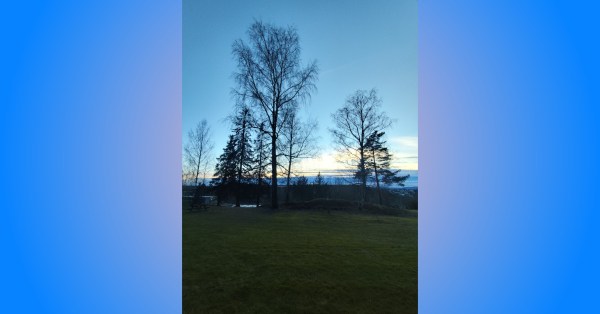
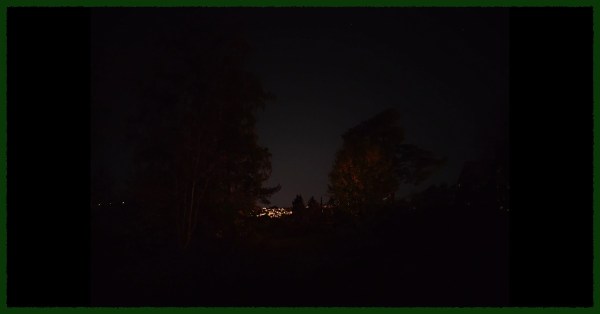
Finally, it’s that time of year again. When the darkness eats away at the daylight hour with an almighty, tireless hunger. Leaves turn brown, fall to the ground and all that was once green seems to have withered away overnight. The temperature drops as gale force winds threaten to lift you up and carry you off to destinations unknown should you fail to find your centre of gravity whenever you venture outside. The cold forces its way into your spine, determined to settle there until the sun gets some of its strength back. And the darkness… The darkness is everywhere… And, if only for a brief spell, we are all the same.

I take great solace in the darkness.

Still there? Good. Believe it or not, this isn’t as sad a post as it may seem – quite the opposite, actually. And, I’ll have to point out that I’m not trying to make light of seasonal affective disorder here, rather, I’m trying to analyse the sort of lift the darker season has on my own well-being as a long-time sufferer of chronic depression. Autumn ushers in the opportunity for me to walk my rather enormous, clumsy and rarely loveable black dog with my head held somewhat high. Together, we can walk among the living without drawing too much attention to ourselves. Hell, we might even feel a sense of belonging for a second or two.

Depression never really goes away, it seems. It’s always there, lurking, biding its time, always ready to pounce when the time is right. But we do get to enjoy a break away from the whipping post from time to time. Autumn has been that time for me, for as long as I can remember. Spring and the beginning of Summer is the opposite. I suspect it’s the pressure of the expectation that you’re meant to be happy all the time, just because the sun’s out for a few more minutes more than the day before. “How can you be so sad when everyone else is enjoying themselves? Cheer up!” they’ll say. Little do they know that those words just makes it worse.

Yes, I can see that ‘everyone’ else is having a great time, for no apparent reason. This only makes me feel left out, frustrated that I’m unable to drag myself up from the abyss, even sadder that happiness doesn’t come so easily to me. It makes me fearful. I stare so hard out the window of the bus my eyes start to water, just to avoid accidentally locking eyes with some poor soul and somehow infect them with my inner demons. Always afraid I might drag someone down with me, just by daring to think I should be allowed to exist among them when I am like this.

Then, Summer turns dirty, grimy, too much – just like me – and the first great flood comes to cleanse us of our sins and wash it all away. With the deluge comes the crisp, clean autumn air. Everything starts dying. The seemingly endless summer nights are no longer as long or inviting as they used to be. No one’s jetting off on holidays or returning from one, looking as if they’ve been laid out on the Weber gas BBQ for a fortnight. Instead, they’ve retrieved their cardigans from the back of their wardrobe, stopped shaving and started making up excuses to avoid socialising.

Me? I can finally breathe. I can leave the house after 7pm without bringing two pairs of sunnies, a hat, brolly and/or a party burka (if all else fails). I no longer have to be afraid I’ll ruin someone’s good mood, just by being myself – everyone is already miserable by the time they run into me. So I start looking forward to the little allowances the colder weather brings along with it, like being able to cover my flaws in layers and layers of clothing, hiding my bad hair days in woolly hats and my face in scarves, lighting my candles and watching all of the Friday the 13th films in one sitting, the appropriateness of having a nip of whisky to warm up when the heater’s on the fritz and knowing that I will be left alone until the sun rises again, give or take 6 months from now. And I can let my dog off his lead for now. I never asked for this dog anyway.

I’ll see you next Tuesday. Until then, chew on this:
Breaking points and boundaries

Imagine for a second, that you’ve spent every second of your existence ignoring your urge to set boundaries to better serve those around you. Imagine having groomed yourself into a spineless shell of a human being by doing so, yet been able to live with yourself regardless, as you’ve convinced yourself it is the only way to go through life, only to have that belief pulled out from under you when a well-meaning stranger realises they have to inform you of your right and duty to put up a few bloody barriers where needs must. This, my friend, is where the floodgates open and the crazy pours out.

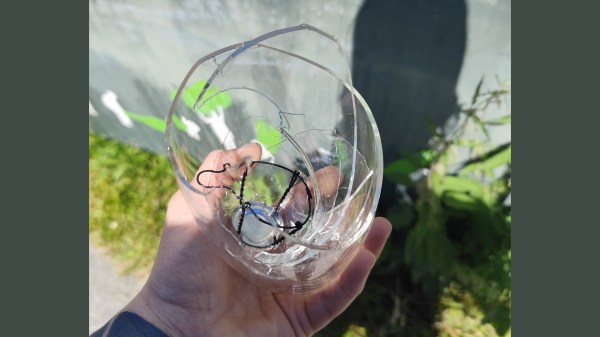
A human being is composed of a million things that can be easily broken; fingers, nails, spirit, heart … yet, only when something soulless yet visible – like a glass – breaks, we’re reminded of the complete and utter devastation something that’s been shattered into pieces leaves in its wake. In all fairness, you can both feel and see your finger breaking without the need for the bone to poke through the skin, but unless it’s completely severed from your hand, it remains attached to your body, the bone itself growing stronger and more resilient after the break. Maybe that’s why most people are willing to set themselves up for heartbreak time and time again, as if they’ve got some sort of dysphoria fetish. In comparison, you might start opting for tumblers made of metal or plastic once you’ve smashed about a dozen nice ones.

A broken glass cannot be put back together, but it can certainly be replaced by something better, new and whole. It’s rather difficult to do that with something so abstract as the personification of ones still-beating heart. Unless, of course, you invest in enough prescription drugs to turn it into an icebox. Or, you build up around it an infinite wall… with a moat… filled with ill-tempered, mutated menopausal women. A fortress both impenetrable and impossible to venture out of.

So, with this type of all-or-nothing thinking, being told you have to start setting boundaries might seem a little daunting. Especially when the people around you aren’t used to that sort of behaviour coming from their favourite doormat, or when, historically, saying the word ‘no’ in the past has met very little compassion or respect from the denied party. Enter existential crisis mode and a never-ending phase of trial and error that will surely push loved ones away and/or become the sort of thing you practise around the people you’re not afraid of pushing away.

What I mean to say is, I don’t think it’s very wise to start setting boundaries without building some confidence first. Not just in oneself, but in the whole ‘giving people the opportunity to get a sense of who you are before you’ve changed yourself into the person you know they want you to be’ thing. In a sense, not setting any boundaries where you need them is not only a disservice to yourself – it’s lying.

So, where do you start? I am in no way certified to tell anyone what to do here, but I’m at least half-decent at looking up those who do on the Internet. So, luckily for you and me, there are a lot of articles out there on the matter. The drawback, though, if you struggle with impulse control, is that there’s no quick fix. You need to be able to visualise the process – you can’t just ‘go with your gut and deal with things as and when’ or just start saying ‘no’. At least if you want to do it right and not just turn into a boundary setting machine or a NO man. I’ve linked a few articles below, for those wanting to learn more about finding out what your boundaries really are and then start setting them successfully.

Therapy in a Nutshell: Boundaries for anxious folks in 3 steps

Embracing your therapy: A beginner’s guide for those who have a hard time setting boundaries

Then there’s this ‘No-Fluff Guide from Nina Gruenewald

Why this? Why now? Well, if the smashing of a single glass becomes your breaking point – the not so gentle reminder that you’re in the midst of a whirlwind of poor decision making because you need an excuse to feel like shit because it’s much easier to wallow than it is to thrive (fuck me, I hate that word) – it’s time to have a look at how you can help yourself before every bridge you built is burned to a crisp.

I’ll see you next Tuesday. Until then, here’s a song for those whose ‘precious illusions’ no longer work the way they did.

When compromise turns into complete self-sacrifice – where do you draw the line?

The featured image is the only photographic evidence (online) of my ever having set foot in Colorado, despite the fact that what brought me there was, by far, the coolest thing to ever happen to me at that point. Maybe even to this day. So, why didn’t I share a few of the million shots I took on that trip? Of the amazing bunch of people I spent the best part of a week with? The shows? The fucking Colorado River? Why did I decide that a wall socket with a bizarre caption was more than enough? Truth? I was terrified that my palpable uncoolness would make them look bad, should someone stumble upon my Instagram account and discover my ineptitude in not realising I was punching so far above my weight that it caused the Earth’s axis to shift at least 10 inches.

Yet, at the same time, I felt I was making a sacrifice. I was denying myself a potentially positive experience, and who knows – it could have even helped boost ticket sales or something. Whatever, I was there for the ride and it was fantastic. I can’t do much about it now, but it’s part of a pattern in me that I’d very much like to break.

The first time I decided to extract myself from a situation where I’d suffer if I did, but also if I did not, was in school. I must’ve been about 10 and I was picked to sing the lead in the school musical – a big fucking deal, of course – but my best friend made it very clear that she would no longer be mine if I didn’t somehow convince the music teacher he should offer her the gig instead. Now, this was a particularly big sell, as she had a blooming hole in her oesophagus from drinking caustic soda as a toddler, resulting in a not so lovely singing voice… but when it comes to self-deprecation, there’s none better than me at making others see things from my point of view. Needless to say, she got the part and I managed to convince myself that it had all been a ruse to make me realise I was actually less talented than a dog turd that can’t even make it all the way out of the dog’s arse and just clings to the sphincter by a threadbare sliver of sausage encased in grass and slime. Thus, I stopped playing the guitar and singing for just long enough for this prophecy to fulfil itself.

Two very different experiences, and none of them really that formative, but you should be able to get the general idea. I’ve been unable to compromise and instead gone all in on the self-sacrifice. You can read more about self-sacrifice in an article by Andrea Mathews om Psychology Today, by clicking anywhere on this sentence.

Regardless, I’ve been thinking about the sacrifices we make and what purpose they really serve, when the ones you are making the sacrifice for don’t know – or realise – that you are making one. Instead, they see how the consequences of having sacrificed your own happiness for them manifest as frowns on your face and start berating you for bringing negativity to their space – wherever that may be. And all you want to do is tell them about the sacrifice you made, why you thought it necessary and how it’s taking all of the fun out of everything now, when your efforts are not being appreciated nor acknowledged. It’s like that saying about the bear defecating in the woods; if no one sees your sacrifice, is it even there?

I don’t have the answer, other than I don’t think the people you think you’re making a sacrifice for can smell that that’s what you’re doing, unless you tell them. And that’s a terrible idea in and of itself. Behaving in a way that makes me feel as if I am making a personal sacrifice, which in turn will be detrimental to my own well-being, and pretending that it’s anything other than self-sabotage, is not very fucking sustainable if you want to live a life that’s not filled with guilt, bitterness and remorse.

Time for the self-deprecation talk to take a hike. I shall see you next Tuesday.

Oh, and since it’s my best pal’s birthday week, do something nice for yourself in her honour. Me, I’m listening to the Elton John song below:

Every cloud…

Except, no, there’s no reason to believe the silver lining applies to genital-shaped cumulus. Cumuli? Anything I learned from my one semester of meteorology seems to have escaped my mind, not unlike the dish that ran away with the spoon. Forgive me.

The second I noticed the skies were descending upon me in the shape of a million bawbags (and just one single cock and balls) – so much so that I stopped, mid-run, to take a photo – I should have recognised it for what it was; a bad fucking omen.

They call it a relapse. I might call it a re-lapse. In judgement (as if one had the sense to make judgments at all). Either way, I say relapse is a four-letter word. Particularly as there hasn’t been any significant and/or prolonged ‘lapse’, and I believe the former requires the latter in order to simply come to be.

Now, before you get ahead of yourself there, I need you to hold your horses just a bit. We’re not talking alcohol here – although it certainly doesn’t help on the occasion it’s poured into the mix – and I’m too high strung to get much effect from any drug. No, I’m afraid we’re dealing with a much more sinister beast here…

It’s her. She’s sensed that my shoulders have come down an inch or two and she’s stepped in to make sure I burn all bridges before anything can happen.

In her defence, she’s only trying to protect me. The teenager trapped inside, too far gone to let go and far too sceptical from experience to let anyone come too close. So, when she rears her ugly head (honestly, one ugly mug is more than enough, we don’t need two), the curtains come down and our consciousness goes on holiday.

She does not give a fuck about any inconvenience caused by her micromanagement. And we suffer. Oh, we suffer.

And this is how I come to wake up on a Sunday morning, having lost approximately 43 minutes of my time between 2am and 3 the night before. Oh, and something else seemed to have gone missing; my bra. How the fuck one goes about losing one’s racerback fucking bra whilst managing to keep every other piece of clothing on is beyond me. My immediate and obvious reasoning was that I must have taken everything off in the pub in an attempt to shag some poor cunt’s husband. It’s not something that’s happened before, but one might assume one gets tired of making the same mistakes at some point, leaving no choice but to reinvent the wheel and make way for some new ones.

A full 24 hours passed, without the resurfacing of said piece of clothing. Having to monitor my blood pressure on a weekly basis, the very beepy machine told me it was about 180/95, but my fever, nausea and blurred vision had already told me that much. Related to the missing bra? Quite possibly. At least somewhat. Add in some work stuff and a few days of poor nutrition and I think we have a winner.

Regardless, I managed to find the fucker after having washed all of my washables – including my sheets and towels. What I have yet to find, though, is my dignity. Or, indeed, the courage to check to see what damage was done over the course of the weekend. Perhaps we’ll never know.

Lest we die of shame – or have another blackout – we shall see you next Tuesday. Until then, enjoy the spectacular featured image and one of the finest and bizarre tunes ever written, by the one and only Kenny Rogers, in the video below. Peace!

Open mind for a different view

Sound familiar? It should – it’s a lyric from Metallica’s Nothing Else Matters. Their self-titled album got a lot of flak when it came out (or, rather, people who dared to be vocal about enjoying it got a lot of flak), but eight year old me had zero fucks to give about other people’s opinion on a piece of music – something that seems to remain a constant to this day.

Can you imagine I had a full post written up and ready to go when the autosave stopped working. Now it’s all gone and you will never be able to taste such exquisite waffle!

You are in luck, though, I want YOU to send in a topic for me to write about… or, if you’d rather I drop a wee teaser from the next step in Hannah’s journey, that’s also an option.

In case you were wondering, I wanted to write about a day I dread and loathe in equal measure; 1st April. I might still do that, though, because someone took the bible for something other than pure fiction and decided we should have a few days off this week.

I shall see you next Tuesday! Until then, enjoy the below video of Rush performing one of their iconic masterpieces at this year’s Juno Awards:

Discontinuation depersonalisation

“Shivering, muscle pain, fatigue, excessive sweating, headaches, weakness, vertigo, gait imbalance, dizziness, ataxia, tremors, paraesthesia, nausea, vomiting, diarrhoea, abdominal pain, electric-shock-like experiences in the brain (referred to as brain zaps), visual disturbances, insomnia, vivid dreams, nightmares, agitation, irritability, anxiety, tearfulness, sexual dysfunctions” (Special Issue Psychopharmacology of Affective Disorders, 2021) – these are a few of my favourite things.

I jest, of course. You’d be hard pressed to find so much as one of these things anywhere even remotely near the list of things I’d wish on my worst enemy (apart from maybe the diarrhoea), yet they are some of the more common symptoms associated with the discontinuation of the ‘serotonin modulator and stimulator’ (a type of antidepressant) Vortioxetine.

Other research studies mentioned such lovely side effects as depersonalisation, emotional incontinence and the inevitable return of the depressive symptoms.

Needless to say, I stopped taking my meds due to their inefficacy and rather intolerable, to me, side effects (I have an intolerance to certain types of medication, and I am not claiming this to be some sort of universal fact or that all drugs are bad. This is just my personal experience.), and now I’ve gone a bit extra bonkers. I’ve been so out of it, it didn’t even occur to me that it could be withdrawal symptoms (I was on a very low dose to begin with, and tapering is not normally necessary), until it was pointed out to me by a professional.

The good news is that it’s not permanent. One day, I’ll be less likely to start greetin’ like a wee bairn whenever I hear any hit song from 1995, and I can get through a whole day without feeling as if I’m only observing my physical body from another realm hidden by a thickening veil… Perhaps one day I’ll be a little less pretentious-sounding as well.

Anyway, my recent lack of inspiration and focus has an explanation. My brain will resume its brain-like activities yet again – soon, even. Multiple trusted internet sources tell me that I am at around the time where the more adverse symptoms reach their climax (YUCK), and that I can expect them to taper off and (hopefully) disappear within the next fortnight.

Just knowing that there’s some logic behind my very odd behaviour in recent weeks helps a great deal – I’m sure I’ll be back to writing fascinating content about, say, how far a human fart can travel before losing speed, aroma or altitude in no time. Perhaps even next week?? You know you’re in for a treat – here’s hoping no one will steal my idea whilst I’m contemplating my existence, the meaning behind the lyrics to Tears for Fear’s Shout, or the secret behind Michael Hutchence‘s incredible charisma.

I dare you to click on the above ‘fart’ link.

Whilst my synapses have been frying themselves in the last drops of oil meant for lubricating my myelin sheaths, and my prefrontal cortex has fucked off on an all-inclusive EasyJet holiday to Lanza-fucking-rote, the world has been burning. But, at the same time, people seem to be finally waking up. I’ve noticed more people spending less time on their phones on public transport this past week, making eye contact and even smiling (!) at strangers. Perhaps there’s hope for our species yet? If not, I’d better hurry the fuck up and finish the second book before we all go *poof*.

Regardless, I’m pretty sure I’ll see you next Tuesday. Until then, you can read this post that I wrote about something absurd, or you can listen to one of the finest NWOBHM albums of all time, Killers, on YouTube.

Why you should say f*ck off to faking it

Today, I’ll start by giving you a choice; you can see this post as the trivial, banal waffle of a fortysomething spinster, or as a welcome distraction to the soon to be if not already 3rd world war currently monopolising every news broadcast out there. Regardless of your choice, please be aware that I will now be diving straight into a rant, in an attempt to escape the harsher realities of my own existence.

If you’d like something more palatable, I suggest you go watch this episode of Banana Man on YouTube – you can do so by clicking anywhere on this sentence. It is quite delightful. Also, made by actual human beings using their actual minds. Even the voices are real.

Or you can pass START without collecting 100 dollars and instead spend a fiver supporting the poor by clicking on this one.

Don’t say I didn’t warn you.

We’ve all heard the phrase ‘fake it until you make it’, but as dishonest as such an approach may be – at least it used to come from a place of needing to accomplish something (and more often than not, the fakery came with a valuable learning experience or two). With the rise of AI, however, the faking has become the norm, and what’s more, no one seems to see the need to learn anything, even when it comes to developing a personality. What was initially designed to be a helpful tool to help develop ideas has become the thing that surely will eradicate both art and empathy in modern society. I’m not presenting this as fact, but I’d say it’s a rational fear at the very least. By faking your way through life using nowt but shortcuts and with no desire to add to your skillset, you’re not only lying to the people that have to suffer through your incompetence – you’re lying to yourself. It’s the ultimate injustice. And if there’s one thing I’ve learned about myself (and that this is a common trait for neurodivergent folks), it’s that I cannot stand injustice. Thus, there is no way that faking it to get ahead is the best solution for us.

To those who still don’t get it, I ask you this; what will you do once you reach the proverbial top? You’ve faked your way there and learned fuck all along the way. How the hell do you expect to carry on the charade?

I have chosen this particular topic, as I keep finding myself in positions where I am meant to pick up the ball from where one of these fakers left it, with no trace of them having done any actual work. In one such scenario, I kept asking for an overview of the processes and tasks I was to become responsible for in their absence, and was (after almost a month) presented with a list of links and a Word document with instructions for using software in which I am already proficient. Me being me, I thought I shouldn’t knock it before trying – maybe they had a better way of doing things – but I soon found myself stumped by the inaccuracy of the instructions. So, of course I asked them to clarify. (I’ve been wrong enough times in my life to know better than pretending to get it…). At which they simply replied; ‘oh, it’s easy, I just asked ChatGPT and jotted down the response for you’. No wonder the ‘quick fix’ tips did fuck all!

At least, with a paid version AI, you can get some decent guidelines, but you should probably run a few tests before listing them in an on-boarding document, eh? Also, I’d much rather do a non-assisted search to find three credible sources and take it from there, instead of having to fact-check anything generated by artificial intelligence.

I know I could’ve let this go – perhaps even should’ve, but I ended up wasting so much of my time trying to make use of the so-called instructions (and doubting myself) that I just couldn’t. It would have been better to just crack on the way I always do, and to revise my textbooks and course videos if and when I’d get stuck.

Over the past few years, I’ve seen so much of this and I’ve had enough. Why should people like me get punished for wanting to do the work and, for instance, writing my own CV and cover letter, when fakers, who’d rather sit all day and chat about what colour they’re going to paint the nursery than doing any actual work, get all the jobs they apply for because they don’t bother fact-checking the lies the AI bot has produced by creating a text out of their poorly worded bullet points? GAH.

Hear me when I say that I am quite irate. You’ve poked the bear one too many times. And this is much, much bigger than me being annoyed at lazy fakers.

Imagine, if you will, that something truly horrible happened to you – a crippling illness, or you were wrongfully accused and incarcerated for murder – would you trust a doctor or a public defender that “got “earned” their qualifications by taking shortcuts? Or, if all of the pipes in your house suddenly burst and needed replacing in the middle of winter, would you trust yourself or a partner using AI and YouTube videos to fix it over a certified plumber?

I certainly hope not.

So, what’s this to do with mental health? I hear you ask. Everything, I say.

Initially, I’d left myself a note to write and research how faking it rarely works for those with ADHD and a side of rejection and/or justice sensitivity. You can read more about this in Amelia Kelley (PhD)’s article on Psychology Today: How justice sensitivity amplifies world issues for ADHD.

I didn’t realise this was a thing until I got diagnosed – I’d just always thought I had a strong sense of justice. This helped explain a few things, but mostly why it felt so unnatural and just wrong for me to be faking anything. It’s like lying to yourself, and our need for justice will help our subconscious see through the lies, so we’ll end up feeling as if we’ve effectively tried to pull one over on ourselves. It’s like masking, but when we really don’t have to – or even should. (One could argue that you should never try to hide who you really are, but hey).

Which brings me to the scary, and most of all really quite harmful, side effect of masking: SKILL REGRESSION; defined on Psychology Today as “behavioural “backtracking” or reversion to earlier coping mechanisms that can occur as people progress through different stages of development”.

This was explained in much simpler terms in a podcast episode I listened to the other day (link at the very end of this post), as the regression of skills you learned while masking. Once you get treated for your symptoms and no longer need to mask, some of these skills may even need to be relearned and new neural pathways need to be constructed to help locate the seemingly forgotten skill. (Thank fuck for neuroplasticity, eh?). I wonder if this works for repressed memories as well. Who knows.

Anyway, I am at the end of my rope here and I need to get ready for work. I promised you a link, so enjoy this episode of Hypercast by clicking on the Spotify link below.

See you next Tuesday! There may or may not be a post on suicide recovery and friendship. Stay tuned.

Rumination, rebranding and other disasters

Tuesday is upon us, at long last. A home office workday has come to an end and the evening gig is but three hours away – just enough time for me to spew out some thoughts.

On the 27th of last month, I came to the realisation that something had to change. I needed to revamp my website, get an email address suitable for an adult female, start letting go of the things that no longer serve me (like the millions of threadbare band tees taking up space in my closet, so littered with holes they make the infamous emperor’s new clothes seem less revealing) – the time had come to fix my life. Yet, it’s taken me almost three weeks to justify shelling out the three bucks for a domain name I decided on back in 2014.

I should explain that this is not a unique event. These eureka moments occur at least thrice a year. BUT. The thing is, whenever I have thought something through, I always (almost without fail) end up overanalysing and ruminating until there’s very little left of the original idea and I’ve lost track of what was so great about it in the first place. Yet, spending hundreds of pounds in one transaction at Boots (or equivalent) doesn’t make me bat an eyelid. In fact, historically, my lack of impulse control in that department has been rather shocking.

So why – OH WHY?! – have I been unable to trust and listen to myself when I know in my gut exactly what I want and need to do (or, what I do NOT need or want, for that matter)? The need to meditate was hanging over me like a raincloud, so I ventured out on what was to become my fastest half marathon in three years, with only three Haribo Happy Cherries (my drug of choice) for sustenance and two hours worth of podcast episodes in my ears. The result? One very delighted and surprised middle-aged sweat-machine with a sore hip, fully determined to start cracking on that decade old to do list.

Incidentally, I think I cracked the code on that whole thing with the “ADHD super power”. When they mistakenly claim hyper focus, or their ability to make tough decisions when faced with potentially life-threatening scenarios, to be a super power, when in fact these symptoms are merely a conduit for the real super power; the masking of symptoms.

I got the idea from something someone said on a podcast about dyslexia and how some people would mask their difficulties by for instance learning a text by heart so that they could recite it in class, rather than reading it out. In much the same way, I taught myself to ‘take photos’ of pages in books that never spoke to me (trigonometry, anyone?), so that I could pull the images out whenever I had a test. As a defense mechanism, I effectively gave myself a photographic memory.

Perhaps I’ll write more on this next week. I haven’t decided yet. I might write about perimenopause. Either way, I’ve gone full gonzo. Gonzo With the Wind! Perhaps it is time to conclude this post.

Why menoPAUSE when you can menoFINISH, amirite? Ha. I jest. See you next Tuesday.

In the meantime, you can listen to the inimitable David Eugene Edwards and his Wovenhand on Bandcamp by clicking anywhere on this sentence.

Hair today – gone tomorrow

– What..? Why are you shouting at me? What’s going on? Hannah squirmed in the ancient armchair, trying to decipher her mum’s facial expression. For some reason, she just kept shouting at her:

– Can’t you see the mess you’re making?! The floor is filthy with your greasy strands… it was clean an hour ago! her mum barked, red in the face now. Of course the floor had been squeaky clean, Hannah had only just finished the weekly deep-clean and had finally been able to sit down for a second and not worry about cleaning everything twice (God forbid she’d clean something in odd numbers, so she’d probably cleaned everything at least four times, if not six). Still, she looked around to see if she’d missed something, and when her gaze fell on the floor under her left hand, she had a start – the knock-off hardwood floor was covered in hair. Hannah went to touch the side of her head, as if to check she hadn’t completely lost the plot. Shit! Another bald spot. And all she’d done was sit down and zone out for just a second.

Hannah had been 16 when that happened – the big, ugly thing that had them ship her off to the child psychiatrist’s, who only managed to make things far worse than they had been in the first place, but that’s a story for another day.

The pile of hair on Hannah’s floor was a result of a type of incessant hair-pulling, a condition that had started to affect her everyday life in a major may, typically categorised as a body-focused repetitive disorder (BFRD) called trichotillomania. Many might think that the disorder only applies to the pulling and removal of one’s head hair, as that would be quite noticeable, but it applies to all hair on the human body, from eyelashes to leg and pubic hair.

You can learn more about trichotillomania, other body-focused repetitive disorders and the specifics by listening to the episode Speaking of PSYCHOLOGY did on BFRD by clicking anywhere on this sentence. I will leave a link to the podcast episode at the bottom as well.

Why am I writing about this, you ask? Well, because it is still something that has a lot of stigma and therefore isn’t really talked about or even diagnosed, unless the patient mentions it themselves. Even then, some professionals may not have heard about the condition. Also, if you search for it on line, almost every single one of the top 10 hits will be misleading.

Additionally, there’s a lot of misconceptions around it, as it (and other body-picking disorders) is often overlooked and/or attributed to something else, like an aspect of obsessive compulsive disorder (it is a common comorbidity), low self-esteem, et cetera.

This means there has not been extensive research on the matter. Funding has been pulled from a trichotillomania therapy programme and reallocated towards the OCD clinic at the University Hospital in Norway. But this is a very real disease. It can ruin a person’s life. And it’s not vanity or even picking at something that needs to be removed, it’s an urge that won’t go away. It’s not new either, we can actually track it as far back as ancient Greece. Yet, we still haven’t determined whether it’s \just another anxiety disorder’, or if it’s a different beast entirely.

Luckily, there are people brave enough to take matters into their own hands and shed some light on this. Things are finally about to change, thanks to Oxford professor Clare Mackay and her upcoming book (expected on 2nd April 2026): Keep Your Hair On: Understanding Urges to Pick, Pull or Bite.

Another brave person that’s helped put trichotillomania in the spotlight in recent years – and, in my opinion, helped starting to normalise it – is the fantastic force that is Amy Schumer. In the Hulu series Life & Beth (with a link to the show’s Instagram below), she portrays a young woman that suffers from the disorder. Schumer’s performance is such that you can’t help but get under Beth’s skin. She’s so relatable, and at the same time unique. She’s impossible, yet entirely lovable. Beautiful, yet hardened to fuck by life’s lemons. Wild, yet longing for stability. Much like you or me. (Unless you are an AI robot – one that’s not Gigolo Joe – Because, if you are, you can fuck right off). If you haven’t yet, you should watch it for the casting alone. It’s wonderfully raw, but at the same time uplifting, in a weird way. And the show demands attention towards something that I am very passionate about; seeing mental health issues as something other than someone else‘s issues.

Personally, I cannot wait for another season (please, please, Amy!). Meanwhile, I will continue reading my Stephen King book, also in anticipation of Professor Mackay’s 2026 outing.

See you next Tuesday!

Life, anxiety and a “sticky” brain

Before we get started on today’s topic, I just want to give a huge, heartfelt thanks to those of you who continue to find the time in your busy day to read my posts – it really means a lot! If this is your first time on here, you can read my previous posts on the main blog page.

Now, for the subject I had planned on writing about last week; unwanted intrusive thoughts. There seems to be a lot of confusion as to what they actually are and how they can manifest, and I have only recently been made aware of the fact that the term isn’t necessarily restricted to just thoughts and images. They are of course what we normally hear or read about, but that’s not the whole picture – it’s not just random thoughts and images. It can include unwanted sensations, memories and stories as well. Possibly more, I really do not know. But I’ve come across a few interesting perspectives and theories on this subject close to my heart that have made me feel a little more enlightened, that perhaps others can find some comfort in as well. BUT. There is, as always, a big dollop of my opinion in here as well, so take everything I say with a pinch of salt. Especially the part about coding. Anyway, that’s the disclaimer out of the way. On with the show.

It seems to me that referring to these uncontrollable impulses or processes as ‘thoughts’ is not only a gigantic misnomer, but hugely misleading, as the phenomenon can be better described as automatically generated impulses or processes that become unwanted when they feel intrusive in an unnerving way, causing distress and excessive rumination. If the brain was a computer, this process could be compared to a constant generation of possible and/or/not responses to any scenario or eventuality one might run into, where the ‘correct’ response – i.e. the action caused by the prompt – is picked based on true/false Boolean logic. Although I flunked out of computer science quicker than you can say 01001110101 20 years ago, this little part of simple coding somehow stuck with me. It works great for simple processes, but a more complex and unpredictable system just might crash once in a while, or let something inappropriate surface by accident.

What I can gather from most of the articles and research papers I’ve come across so far, is that the experts agree that we all have these concurrent processes going on all of the time – it’s completely natural. Which makes sense. Much like a computer that never switches off or reboots, our brain keeps processing and generating impulses that will keep us from switching off. And, much like when we are in the dream state of sleep, some pretty random stuff can manifest from one of the potential responses generated by some event that perhaps entered our subconscious via an advert, a TV show or something we saw out of the corner of our eye when we weren’t really paying attention, seemingly from out of nowhere. Since we did not interact with this event, in that it did not happen to us directly, our reaction (or response) is not necessarily in line with our conscious thoughts, wants or wishes. Needless to say, your mind suddenly doing something so outlandish to you it seems as if you no longer control your urges or behaviour, it can be a jarring experience.

Imagine, for instance, that you’re having a bad dream because you’ve watched A Nightmare on Elm Street, but instead of being chased by Freddy Krueger… you are the monster killer… only, you’re not asleep in your bed – you’re wide awake and thinking about stabbing the person next to you in the lift to death with a rusty blade. And this urge has made itself known despite your pacifist nature and philanthropic views, yet it feels so real, as if you’ve lost all control of yourself and that your sanity hangs on by a thread. Pretty terrifying, right?

Luckily, for most people, a sudden flash of an alternate reality such as this can be shrugged off as what it is; something bizarre, laughable, that would never, ever happen. But for those of us prone to internalising, overanalysing and rumination? When these unwanted intrusive responses land on our particularly sticky brains, it can become a real problem, sometimes leading to self-deprecating behaviour, negative self-talk and suicidal ideation. If you suffer from anxiety or a personality disorder, you might even convince yourself that this means that this is your ‘true personality’ shining through, and the more you think about it, the harder it seems to stick. I won’t go into specifics here, as to what some people can convince themselves to be capable of – it can be all too triggering.

And why focus on the negative, when there seems to be a universal concurrence among experts, that that is absolutely not the case? I mean, if something seems so foreign to you that you’re practically contorted by feelings of repulsion and anger, it is probably not your second nature. If you were to get a song you really hate stuck on a loop in your head, you wouldn’t think that to mean it was secretly your favourite song, would you?

Then, why can it be so difficult to dismiss these impulses when they occur? My guess would be that our anxiety feeds off of such things and it is far too easy to go into that unhealthy spiral of self-doubt and feelings of unworthiness.

Well, how the fuck can I rid myself of this affliction, then? you may ask.

This is where the experts tend to disagree. (Which is why I’ve chosen not to mention any of said experts by name, but I’ll include some links to articles on the subject below, if you want to read more about the different theories). Some say they will only go away if you ignore them, while others say that you simply must acknowledge them before you can let them go. Me? I am inclined to think that there is no cure-all. What works for your aunt Mildred might not work for you, and what works for you will probably not work for your best mate. We are all different, despite being similar in so many ways. But, what I am fairly certain might be a really good idea to do, if you are struggling from the distress brought on by experiencing unwanted intrusive urges, physical sensations, images, scenarios or thoughts, is to talk to a professional about it. You can start by finding a mental health help organisation that can point you in the right direction of someone that understands how debilitating living with something like this can be. Links to articles below.

Support groups in the UK

Mental health support phone service in Norway

Finding a good therapist in the US

That’s all for now. See you next Tuesday for another overshare. Or go buy my E-book – it’s on special offer this week.

Alex Dimitriu, M.D., an expert in sleep medicine and psychiatry, offers some tips on how to tackle – or even stop – unwanted intrusive thoughts in this article.

Read this article on Psychology Today on unwanted intrusive thoughts by Martin Seif Ph.D. ABPP and Sally Winston Psy.D.

Or this one, by the same authors, where they have a closer look at intrusive sensations and stories

How rumination harms your mental health

When Thoughts are Sticky; Pure OCD and Generalized Anxiety Disorder, by Hannah R. Goodman

Blog at WordPress.com.

Up ↑