Blog

Irreverent reveals

Someone commented on the not entirely spectacular fact that I haven’t posted anything on a social media account in over a year. Well, that’s due to a number of factors, but two of them are a) whenever I am out doing something with people whose company I enjoy, I tend to keep my phone tucked away and/or I’ve not got the Mark II on me, or b) what I consider a typical Kodak moment these days is something akin to the header photo. Now you know.

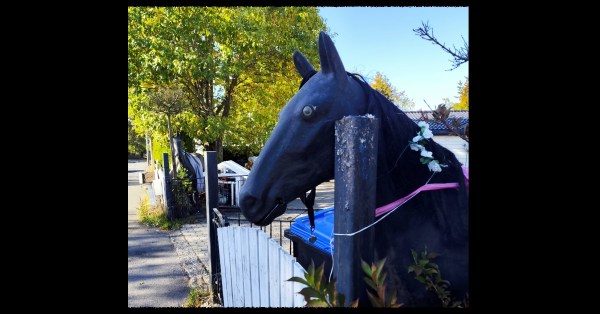
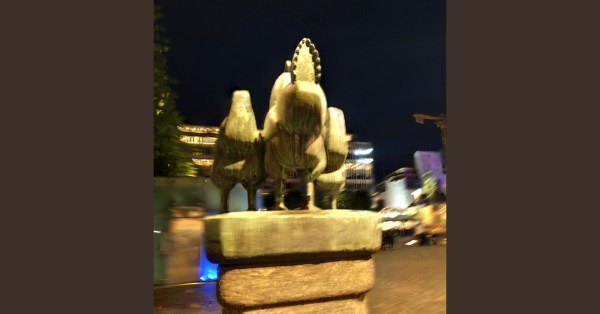
The above has very little to do with what I am about to write, though, other than that I found something that is revealed in the carving of the statue of which we can see the backside as particularly post-worthy. Why on earth would you spend time on including the cloaca of an inanimate object? It’s not like it’s going to need it? See, its mere existence beckons an array or questions.

On another note, you can do a deep-dive into cloacae (tee-hee) and/or other “digestive tract talk” by checking out the Three Bean Salad podcast. Perhaps start with the Adverts episode. Right, that’s enough of the anus for one day.

My recent posts may or may not have revealed that I’ve been on my second book, but somehow let procrastination get the better of me. So, in an attempt to force myself into holding myself accountable, I’ve decided to unveil the title, as well as the prologue to see what you guys think about it. Feel free to weigh in however you like, either by clicking on the icon you prefer below

or, you can comment on this post or use the contact form. If you’ve yet to read my book, the Kindle version is cheap as chips.

Next week’s post will also be a reveal of sorts, but we’ll cross that bridge when we get to it.

Right… are you ready? Am I ready? Here goes:

Life in Reverse – Killing Myself to Live

Prologue / Suicide Note, Pt. 1

A year has gone by since we left Hannah on that bus, finally strong enough to take a step in the right direction and standing up for herself to a person that had caused her nothing but harm over her formative years. You would think she’d be thriving right about now, right? That she’s finally all settled in her lovely new flat, aching to get back to work with the support of her therapist, a healthy romantic relationship brewing somewhere on the horizon. It turns out, though, just because you’ve decided to start making things work for yourself, doesn’t mean the universe is going to get on board. Funny, isn’t it? We’ve all heard the words; It’s going to get worse before it gets better.

The problem is, we can tackle ‘worse’ just fine. It’s what we do! It’s the ‘better’ that might just be the end of us.

And, yes, all of the chapters are related to relevant pieces of music. Also, if that tickles you, you should read Trackman; a spectacular piece of writing by Catriona Child.

So, I shall see you next Tuesday, for my second unveiling. Until then, here’s the song mentioned in the excerpt:

Squirrels and the magic of behavioural economics

You might wonder how I let my personal life fall into a state of such disrepair. Well, without going into too much detail, my theory is this:

From a very young age, it was instilled into me by my caregivers that fear was the best – if not only – motivator. Meaning, of course, that any flaws or failures were to be subject to castigation of the utmost severity (i.e., you’d be terminated from the household and stripped of your privilege of any further ‘caregiving’). Success equalled strengthening the brand of the commissioner(s) – previously known as the caregivers – whereas failure to comply would lead to the ruin of the same.

The positive outcome of this for me, personally, was that I learned how to make myself do things that didn’t come naturally to me (like, say, fucking maths, meticulously budgeting and sticking to it, always paying a higher than required tax percentage and calculating the energy prices in case of inflation – all things any child should know how to do, right?) by always expecting the worst. This makes me the perfect employee, as I will always strive for perfection out of the sheer fear of being furloughed, or worse.

Alas, for someone letting fear define what’s important, the balance between work and life would be more or less non-existent. Furthermore, striving to do anything that might spark any kind of joy outside of the workplace would be deemed unworthy of the same focus, as they don’t have that same fear attached to it. Or any. So, if fear is motivation and there’s no aspect of fear in what you are doing, you’ve no real way to convince yourself that it is valuable enough for you to work towards. This should be regarded as one of the negative outcomes, of which there are plenty. For instance, you can read a little something I wrote about “love” and emotional wounds by clicking on this sentence.

Conclusion: With this fear-based approach to success, one would fail to prioritise self-care when needed – or at all. Ultimately, this could lead to forgoing any social interaction, personal hygiene efforts or indeed after-work activities that only benefits the self, meaning you’d only really feel like a ‘real’ person when called upon by the commissioner. Which, in turn, would lead to a sense of increasing worthlessness that might lead to prioritising self-harm over selfcare.

So, how does one go about changing the script, so to speak? Do you really have to go reinventing the wheel, or un-learning everything with years and years of cognitive behavioural therapy? How do you know how to spot the bullshit – or, more importantly, the bullshitters?

Well, I may not have the answers you seek, but my money’s on this: It depends on the fucking person. The one guarantee is that there’s no cure-all. But, if there’s one thing you need, I’d say it’s accountability to yourself and to your goals. And your motivation cannot be founded in fear or regulated by negative self-talk. This includes the fear of not reaching your goals!

Perhaps the key to motivation lies in letting go of a fear-based driving force. Or, maybe it’s about learning how to accept and embrace that good things are in fact real and good, and not just some mirage or dirty trick. It could be physical too, of course. Maybe you just need to allow yourself to breath in order to let your shoulders down. Whatever it might be, I think it requires the self to let go of the assumption that society expects certain things or collectively looks down their nose at you for not being good enough. In reality, it is the self that has adopted this view and made it its mantra. And that just might be the key to change.

After all, if the person holding the whip that caused those scars across your back no longer bothers to crack it; why should you?

See you next Tuesday. Until then, enjoy the fine tune below:

Swan Songs

Recently, a dear friend and I were talking about how autumn had suddenly descended upon us, and she mentioned how her partner had referred to the transition as not the end of summer, but “the beginning of their year”. I really liked that. So, as a few chapters in my life are closing, I aim to view the coming time as a new beginning – rather than grieve what could have been.

According to Wikipedia (and almost every dictionary), the phrase swan songrefers to a final gesture, effort or performance given just before death or retirement“. Not only does it sound better than saying something along the lines of ‘going out with a bang’ or similar, but I find it helps highlight the gravity of purposely exiting whilst leaving behind something of value to commemorate your efforts. In other words, you’re not just burning the bridge, you’re blowing it up in ways Guy Fawkes could only dream about.

Incidentally, the above phrase is also the title of one of my favourite Down songs (YouTube vid embedded at the end of this post).

As I mentioned, there are a few things coming to an end this summer. Some have plagued my mind for what seems like an eternity, while others simply seized to make sense over the past wee while. The cost had started to exceed the benefits to such an extent that it started eating away at my sanity and everything I’d worked so hard for started to come tumbling down. Only this time, I was able to see that I was going to have to make a choice if I wanted to get my head back over the water’s edge again. I might still be treading water, but at least I’m breathing.

If you missed my last post, about the detrimental effects of avoiding making choices I should have made, you can read it by clicking anywhere on this sentence.

Some endings are inevitable, other ventures meet their demise by design. Then, there are those that come to an end due to sheer self-sabotage. Here’s hoping that sort of thing has run its course forever this time.

Short and bittersweet, like most things one may be feverishly indifferent to, this post, too, has entered its final paragraph. I’ll see you next Tuesday. Until then, make sure your new beginnings fit in with your main goal, go read this post about hope – or, better yet (for me), buy my book – or just do something that makes you happy.

“Send me love and I may let you see me. Send me hope that can spin in my head”

FTS.

Catch-’26

This week, I’ve been thinking a lot about choices. Or rather, the fact that the choices I dared not make are the ones I’ve come to regret the most. To quote my dear friend Bob (misquoting Wayne Gretzky):

“You miss all the shots you don’t take”.

You could say our lives are shaped by the choices we make. Sometimes, the choices we don’t make shape them in ways we cannot control. In fact, refusing to make a choice is a choice in and of itself – it’s choosing to avoid taking responsibility for your own life and/or actions.

Right, a bit bombastic, perhaps. But you catch my drift.

The most annoying thing, though, about the choices I didn’t make, is that I went against my instincts by not making them. Every time, without fail. More often than not, I refrained from making a choice simply because I was waiting for someone else to do so – as if I was unable to make the right choice for myself when I knew very well that their choice would be detrimental to myself, if not the both of us (or worse).

Now, I’m not the type of person who wallows in bitterness. I’ve no time for that. What’s in the past is in the past and I don’t like wasting my time on making myself feel terrible because I’ve acted out of bitterness or resentment. Alas, when one is seemingly unable to learn from one’s mistakes – i.e. the pattern seems to re-emerge over and over again – one simply has to stop and try to shake some sense into oneself. Wouldn’t you agree?

Please excuse my self-indulgent ranting, but I’ve had 8 hours of sleep two nights in a row for the first time since I was a teenager and don’t know what to do with myself. We’re going full gonzo today. If you’d prefer something more nuanced, let me direct you to a page containing links to outlets from which you can purchase my book, or this post about some nonsense that other readers seemed to enjoy.

Another thing that worries me is this; what signals am I sending my subconscious by ignoring my gut feeling?

I found several pieces of writing on exactly this, but only one of them seemed to be rooted in scientific research and based on The Arbinger Institute’s Leadership and Self Deception: Getting Out of the Box (2000) and was posted on Psych Central seven years ago. You can read the article by clicking on this link. The conclusion mirrors my beliefs/fears; self-deprecation.

So, how do we change this? I once read somewhere that it takes approximately 14 days to change a habit and I’ve regarded it as truth ever since. You cannot change my mind. But, that means actively doing something to implement the desired change over those 14 days. Surely that’s a lot of work just for the sake of some unconscious self-respect? Or is it in fact a very small price to pay for something tremendously valuable?

I think I’ll put what I learned from last week’s post about hope theory to good use and set a goal for myself for the next fortnight and find out, as an experiment. Perhaps I’ll even give you an update on my findings.

I’ll see you next Tuesday. Until then, stay true to yourself and listen to Lowrider:

Don’t fault a girl for dreaming

Growing up, my dreams kept me going. The dream of finally one day escaping that horrible shit town, the gossip, the not fitting in, the shame, the lack safe places – you bet. But also the dream of a future filled with a few possibilities and a couple of pretty mad things I just knew were going to happen, however ridiculously far-fetched and logic-defying they may have been.

Interestingly enough, it was the particularly mad ones that took up most of my time – I suppose because they were so far from my own reality that they didn’t feel tainted, somehow – and they’ve been the ones to actually come true once I did get out of that place.

Don’t worry, today’s post will be short and sweet (?), because I’ve realised I’m meant to be on holiday this week – might as well give you lot a little time off from the usual doom spirals as well.

Regardless. I think it’s time I put the same amount of passion, overthinking and incessant manifestation I leant to those “impossible” scenarios to some hopes and dreams that would vastly improve my existence if they came to be. Not unlike last week’s post, this is a bit of a mindset change situation. But the 6am sunset I witnessed this morning lit a spark. Perhaps I’m ready now, to let the good things in.

If we’re to say that, in general and within reason, hopes and dreams (the daydreaming kind) are good for us, not many research articles will disprove that claim. I didn’t find many anyway, but I didn’t dig very deep. Click here if you want to read about how hope “kills your chance of happiness”.

What I did find to support my own theory, though, were a few interesting pieces on the matter. This editorial on the psychology of hope is one of them. This is a quote from said article: “[sic] hope seems to act as a catalyst in transforming negative experiences into growth opportunities“.

Forbes published some findings about the psychological basis of hope in this 2021 article, where you can learn more about hope theory and positive psychology (essentially, hope=motivation), as well as the detrimental effects of hopelessness.

What I gather from what I’ve found, it’s safe to say that hope can get us through the bad stuff in life. However, you’ll need to use your hope to map out a route towards your goal(s), starting with a clear indication of what it is you’d like to achieve. Otherwise, it’d be a bit like hoping to win the lottery and not buying a ticket.

Yes, I saw that episode of My Lottery Dream Home as well, where somebody won because they found a ticket and/or a scratcher, but I don’t want to go into fate/luck/karma blah, blah, blah. Love the show, though!

I feel as if there’s some stigma attached to both hopes and dreams, but I’d like to change that for myself. The shame attached to my daydreaming is someone else’s and not my own. Like in Field of Dreams, or better yet, Wayne’s World II, or the first one (at 9:17 ish);

if I build it, it (or, I, hah) will come. Hope will be my tool.

I hope to see you next Tuesday. Until then, here’s a lyric from a song by a band of my favourite dreamers (link to full song in the YouTube video below):

“When sadness fills my days,

It’s time to turn away

And let tomorrow’s dreams

Become reality to me”

B. Ward, G. Butler, T. Iommi, O. Osbourne, 1972

Stop, collaborate and listen – why ‘being loved’ doesn’t necessarily mean you feel that way

Looking for inspiration for today’s post, I ended up going to the APA’s flagship podcast Speaking of Psychology – needless to say, I was not disappointed. The episode I’m referring to is #381 How to feel more loved, with Harry Reis PhD.

Psychology Professor Harry Reis is the co-author of How to Feel Loved: The Five Mindsets That Get You More of What Matters Most (written with happiness researcher Sonja Lyubomirsky). In the podcast episode linked above, he discusses with host Kim Mills the five mindsets the book is based around, as well as the distinction between being loved and actually feeling as if you are. I’ll leave it to the experts to enlighten you with the facts here and instead tell you why I found this interesting.

You may have read some of my other posts about my slightly untraditional (some may even go as far as calling it skewed) view on the topic of love, or you’ve read my book and realised that I have no clue how to interpret any signs of love (or accept it as truth if uttered in actual words), as I’ve only ever been on the receiving end of the conditional kind throughout my formative years. Strangely enough, that tends to make you sceptical whenever someone claims to love you without wanting anything in return or trying to make someone else jealous.

Regardless of my lived experience, I found Reis’ voice oddly disarming, and the way in which he spoke of the book and the mindsets told me that this was genuine and not just a stunt to boost book sales (not that that’s something the APA tends to do anyway, but still worth a mention). Some unsurprising statistics got to me straight away, of course, because people that feel lonely tend to feel that way because they feel that they are not loved – not unlovable/unworthy of love or that they do not love themselves, just that they don’t feel like they are not loved by others. Secondly, lonely people tend to die younger. To me, this means unloved=early death. So, let’s move on to the solution to this before we head straight into the depths of the abyss, because there is one (or, five, rather).

Turns out, you need to open yourself up to love in order to feel it. Not to receive it, yeah? Because people can love you regardless of your realising it, but you need to let your guard down a bit for the love to pierce the veil, so to speak.

The first thing they mentioned was active listening, as in you have to learn to really listen to the other party of a conversation, rather than spending that valuable time thinking about what you want to say next. Now, I’ve always considered myself to be a great listener, because I do do that; I listen intently and ask follow-up questions based on their words, rather than my own interpretation of them or on how I’d like them to perceive me. But that was when I realised that, even though I’m a decent listener, I am absolute shit at letting them ask me anything personal. I do not partake in the sharing. Thus, I make it very difficult for (most) people to get to know all of me, the real me. So, when people like them claim to “love” me, I’ll know that they don’t know everything, hence their love cannot be true. (Of course I’ll assume they wouldn’t like the whole package if presented to them).

Effectively, I am denying myself even the chance to feel loved. And that’s probably why I tend to feel loneliest when I’m surrounded by people who so blatantly share a mutual love of each other. I mean, how very dare they, eh?

So, it’s not really about being a good listener as such, but a good communicator. Daring to embark on that two-way kind of conversation. Now, if I’d known more than two people to ever handle all of my shit without making a swift and very Irish exit, it might not seem so damned terrifying a concept. But, like with every other toxic habit, you’ll have to put the work in to create sustainable change. The least I could do is try. I know where I want to start, at least, and that’s by getting my hands on that book. Also, if there’s an audio version with Harry Reis available, I’d gladly get back on Audible faster than you can say emotional wounds.

That’s it for today. I shall see you next Tuesday. Until then, may I interest you in a clever podcast that’s quite unique in not being either a complete time suck or horribly inaccurate and/or both?

If you’re a Spotify user, you can listen to the full episode by clicking on the link below. If not, you can find them on Apple Music and the link at the very top.

Jagged little pills

I’m pretty sure you all knew that I wasn’t going to write about what I hinted at last week, because life happens. Or doesn’t, to be fair. Time is a fickle beast. So, let’s just move on, eh?

Also, this is going to be very, very short.

I have no idea how this song snuck onto my radar as a kid, but I’m going to assume the radio had something to do with it. (If you can’t remember a time where the radio and/or fanzines got you into new shit, this blog is not for you). Regardless of its origin and my disregard of the band’s popularity – and my being the ripe old age of about 12 – I found the song’s lyrics resonated with me in such a way that it’s still a go to for my brain’s playback system whenever I am about to head straight down into the welcoming arms of the great abyss:

“I’ll do my crying in the rain”

Makes sense, doesn’t it? It also makes me think that perhaps that song was one of many reasons I fell in love with running in Edinburgh; whenever I hit one of those milestones PBs, it was on an empty stomach, a monster hangover and an all-encompassing need to knacker myself out in order to deal with everything – and if it wasn’t raining, the morning haar rolling down off the Seat would do the trick.

Also, apologies to any pedestrians along the Porty promenade that may have found themselves in the way of a greetin’ bastard singing along to one of David Hasselhoff’s greatest hits instead of breathing, punding the pavement as if they had any right to be there…

These days, I’d like to think I’ve found better ways to deal with my emotions (or, perhaps having someone teach me how to put certain things into words rather than trying to force them out in the most violent way possible had something to do with it), but very few things will feel as cathartic as a good old cry in the rain.

And it is this that I’d like to dwell on for a bit today, if you may. Because things are bound to happen. Something will remind you of something that impacted you in your youth. I came across a lyric the other day, from one of my favourite songs off of an Alanis Morisette album, that I’d never once thought about before:

“I’m 13 again. Am I 13 for good?”

And the words moved me, because my one of three reasons for still walking this earth is trying to do things that would make ‘the dreamer‘ (AKA 13yo moi) happy. Something that would make it all worthwhile. And something’s awakened this dreamer and it has left me terrified that all of my attempts to rid the world of my essence will come back to bite me on the arse. I’ve crossed off a big item on my bucket list and I find myself daring to hope it won’t be the only one.

That is all for this week. I’ll see you next Tuesday. If you made it all the way down here, here’s a special treat for you:

Grave expectations

“So, how’s the writing going?” he says. And I had to admit that it’s not. At all. “I’ve not done anything productive since [sic]” and instantly I could hear all the excuses I’d been giving myself for the past 6 months, for how I’ve failed to do the one thing I know will give me purpose, accountability, even joy in some weird sense.

Self-sabotage, pt. 2, eh…

You see, when something good happens, hope starts to build. Not even that, maybe just a glimmer of hope triggers something so alien and futile as a new neural path struck in the opposite direction of all the others. So, we choose not to do the things that’ll enable such hapless and fruitless endeavours. Until the next time, of course, something unexpectedly positive in nature comes around and we’re forced to look lady luck in the eye.

After all, what’s more terrifying than going after the holy grail knowing you’ve got an actual winning chance?

Welcome to Desolation Highway.

If you’re taught, early on, that disappointment is inevitable due to your existence alone, you’re no doubt better off trying to shield yourself from the things that seem unequivocally and genuinely good. And your scepticism would be coming from a place of experience, that good things only happen to other people and not to you. We’re meant to contribute to the greater good by making sure others will both have and eat all of the bukkake. Or, was it cake? Who knows – not a fan of either. But the one certainty is that self-indulgence of any kind is not only wrong, but so wrong that it takes away from the so-called greater good. Which is why completing the one thing that would show others that you’re motivated by the one good thing that actually did happen, despite your lack of trying and incessant efforts to burn all bridges, becomes a reminder of how guilty you should feel for recognising even the slightest flicker of self-worth.

Why is hope such a dangerous thing, when hurt is the feeling you know best? Perhaps it’s because you already know that, when you allow yourself to feel hopeful, you set yourself up for even more chances of finding those small pockets of happiness. But not only by chance, but with actual effort. And, if that were to go away after having had the chance to get used to it, the inevitable hurt at the end of it would be such that we could not even stand to bare it. So we do our best to stop the good things from happening, just to avoid the extreme pain of potentially becoming rejected by something we actually wanted for once.

Hope and epistemology are, to me, interlinked by the fact that they both relate to expectation. The latter may be more science-based than the former, but it’s all about being able to envision realistic outcomes based on your experience. I may not be the biggest fan of Socrates’ biggest fluffer, but I do think he ‘d know exactly what I’m getting at here. Arguably, without Plato we wouldn’t even know about Socrates. Famously, Plato never spoke in his own voice in his dialogues, yet he seemed to understand the importance of his own role in bringing forth the messages of them. Double-edged swords and all that.

I’m not sure what’s brought this philosophical babble on, it might have been a discussion I had earlier today about the theory of the Id and the Ego being excuses for horrible personality traits that you don’t want to acknowledge, and I may or may not write a word or two on that soon. But not tonight. It is far too late and I seem to have decided that I’m going to try to not sabotage tomorrow for myself just yet.

I’ll see you next Tuesday. Until then, let’s all just remind ourselves that good things can happen and that it’s okay to hope – maybe not fully expect, but certainly dare to hope – for some things to work out in our favour too. And not only despite our best efforts to stop them from doing just that.

Sun, shades and second chances

I’m not quite sure how, but we’re at the end of another month. I’ve been waiting for Summer and now it’s almost gone before I’ve fully realised we’re in it. (Shockingly, I can be more preoccupied with analysing past mistakes than living in the moment).

Last week, however, I got the chance to go to a festival I’d otherwise be reading about in the papers. Not only did I get to see a bunch of brilliant bands (Alice Cooper, Anthrax, Accept, Death to All, to name a few), but I got to leave my laptop behind and experience the outside world – turns out I’d forgotten about all of the good eggs breathing the same air as me. Now, don’t try to picture an egg breathing.

It’s funny how anything meaningful tends to turn to shit when you’re busy staring into the abyss.

Regardless, the whole experience sort of opened my eyes to how this mystical festival realm/alternate reality became a platform for reconstructing a few bridges that I’d feared were long burned beyond repair. Turns out, an apology really does go a long way. You can read more about friendship stuff in a few of my other posts, but I think this one needs to stay a little philosophical, somewhat hopeful (yet, still, consistently anxious). The lack of any rants or verbal incontinence in this post might serve as keys to its incredible shortness, but the same can be said for my return to the living (however brief it may be).

Turns out, with the likelihood of unlikely friendships, even a thistle in all its spiky glory can experience being part of the universe’s many symbioses.

See you next Tuesday. Until then, go see a gig this weekend. Do something for you and fuck everyone else (maybe not in the carnal sense, but if you do; use protection) – I find it’s when you prioritise yourself that the good stuff happens. Also, if you find yourself in the south-eastern part of Norway, you should take yourself to Rockstream festival near Tønsberg. It’s gonna be a good’un. And you just might see a familiar face on stage Saturday night.

Breaking points and boundaries

Imagine for a second, that you’ve spent every second of your existence ignoring your urge to set boundaries to better serve those around you. Imagine having groomed yourself into a spineless shell of a human being by doing so, yet been able to live with yourself regardless, as you’ve convinced yourself it is the only way to go through life, only to have that belief pulled out from under you when a well-meaning stranger realises they have to inform you of your right and duty to put up a few bloody barriers where needs must. This, my friend, is where the floodgates open and the crazy pours out.

A human being is composed of a million things that can be easily broken; fingers, nails, spirit, heart … yet, only when something soulless yet visible – like a glass – breaks, we’re reminded of the complete and utter devastation something that’s been shattered into pieces leaves in its wake. In all fairness, you can both feel and see your finger breaking without the need for the bone to poke through the skin, but unless it’s completely severed from your hand, it remains attached to your body, the bone itself growing stronger and more resilient after the break. Maybe that’s why most people are willing to set themselves up for heartbreak time and time again, as if they’ve got some sort of dysphoria fetish. In comparison, you might start opting for tumblers made of metal or plastic once you’ve smashed about a dozen nice ones.

A broken glass cannot be put back together, but it can certainly be replaced by something better, new and whole. It’s rather difficult to do that with something so abstract as the personification of ones still-beating heart. Unless, of course, you invest in enough prescription drugs to turn it into an icebox. Or, you build up around it an infinite wall… with a moat… filled with ill-tempered, mutated menopausal women. A fortress both impenetrable and impossible to venture out of.

So, with this type of all-or-nothing thinking, being told you have to start setting boundaries might seem a little daunting. Especially when the people around you aren’t used to that sort of behaviour coming from their favourite doormat, or when, historically, saying the word ‘no’ in the past has met very little compassion or respect from the denied party. Enter existential crisis mode and a never-ending phase of trial and error that will surely push loved ones away and/or become the sort of thing you practise around the people you’re not afraid of pushing away.

What I mean to say is, I don’t think it’s very wise to start setting boundaries without building some confidence first. Not just in oneself, but in the whole ‘giving people the opportunity to get a sense of who you are before you’ve changed yourself into the person you know they want you to be’ thing. In a sense, not setting any boundaries where you need them is not only a disservice to yourself – it’s lying.

So, where do you start? I am in no way certified to tell anyone what to do here, but I’m at least half-decent at looking up those who do on the Internet. So, luckily for you and me, there are a lot of articles out there on the matter. The drawback, though, if you struggle with impulse control, is that there’s no quick fix. You need to be able to visualise the process – you can’t just ‘go with your gut and deal with things as and when’ or just start saying ‘no’. At least if you want to do it right and not just turn into a boundary setting machine or a NO man. I’ve linked a few articles below, for those wanting to learn more about finding out what your boundaries really are and then start setting them successfully.

Therapy in a Nutshell: Boundaries for anxious folks in 3 steps

Embracing your therapy: A beginner’s guide for those who have a hard time setting boundaries

Then there’s this ‘No-Fluff Guide from Nina Gruenewald

Why this? Why now? Well, if the smashing of a single glass becomes your breaking point – the not so gentle reminder that you’re in the midst of a whirlwind of poor decision making because you need an excuse to feel like shit because it’s much easier to wallow than it is to thrive (fuck me, I hate that word) – it’s time to have a look at how you can help yourself before every bridge you built is burned to a crisp.

I’ll see you next Tuesday. Until then, here’s a song for those whose ‘precious illusions’ no longer work the way they did.

Blog at WordPress.com.

Up ↑