Against the grain for the greater good

On the topic of last week’s post, let’s talk about human value again, shall we? Specifically in terms of making untraditional choices and society’s failure to realise that the reason behind said choices does not concern anyone other than the person making it. I am of course, yet again, talking about something people like to pretend doesn’t occur in their world, because acknowledging it would mean they would have to reflect on why on earth they didn’t take a beat to contemplate just how clever it would be to bake a batch of mini-mes with subpar ingredients…

Firstly, I’d like to begin by explaining that this is not necessarily about deciding whether or not to have children – we need to acknowledge the fact that there are quite a few people that would very much like to have them but cannot. The reason should be of no importance to anyone but the person and/or couple suffering from involuntary infertility, unless you are in a position that allows you to help them realise their dream of reproducing.

Secondly, many of my friends have kids. Some were perhaps more of a surprise than they would have liked at the time of conception and others not, but in every case they have shown themselves to be rather spectacular at this whole parenting gig.

So, let it be known that I am not against people reproducing. I am simply hinting at the fact that whether you want to or not should be a private matter. Furthermore, choosing not to doesn’t mean you hate children. In more cases than not, I expect it is the complete opposite.

Let’s say you’re just getting to know someone and you’re of a certain age, so you’re trying to find out just how compatible your lives are before commit to a serious friendship. Asking them if they’ve any children would be perfectly natural. If their answer to your question is no, however, you have absolutely no right to ask them why. Doing so would be rather cruel, plus it is none of your business.

It would be akin to asking you why your mother didn’t allow you enough oxygen when you were in the womb, or, indeed, why on earth you found it necessary to contribute to an overpopulation that is threatening to drain the earth’s natural resources. You can read more about the intricacies of population growth, environmental degradation and climate change in article published on the UN’s website by clicking on this sentence.

Regardless, you could stir up a whole turdnado (you know, like a sharknado, but with shit) by poking your nose where it doesn’t belong. Just think about it – would you be able to handle it if your ‘simple question’ was the last straw for this person?

Granted, for some, it’s about taking the responsibility of not forcing the life of an unwanted creature on an often unsuspecting world. But that’s a decision that will have layers to it as well. There might be a family history of mental illness or a birth defect of some kind, it could be the lack of any known family history, perhaps they experienced or observed traumatic events during their own childhood that impacted their choice. Or, hot fucking take, they just didn’t want to risk having their downstairs ripped apart by someone they might not even like, only for post partum depression to take over once the downstairs have stopped aching.

Also, in case you didn’t know, raising kids is expensive. Not everyone has savings or a steady job to help fund the endless list of activities and made-up holidays everyone has to attend nowadays. Or a partner with which to share the financial struggles, for that matter.

Then there are people who didn’t have a choice in the matter. Victims of rape, some of which might not even know they are pregnant until it’s too late to do something about it. Women that have been forced to live with a living, breathing constant reminder of one of the worst, most painful moments of their existence, only to develop a love for the thing, stronger than the love they have for themselves. Or women that have experienced the same and having to give the child up for adoption without their consent. Asking them why? Not okay.

There’s a multitude of possible reasons why one would make the choice of going against the norm. Perhaps the term childless is the culprit. We don’t call the opposite child-riddled, so why does not having kids deserve such a negative suffix? If I’d had more time, I’d dive deep into the etymology here, but I will save it for another day.

There are plenty of happy childfree people out there as well, of course. Guess what? Their reason is also private, unless they bring it up.

So, my frustration remains with society’s lack of respect for the privacy of those who have chosen differently than the norm. Take, for example, a setting where colleagues are getting to know one another and one party is pointing out left and right the other’s ‘poor’ qualities, such as their failure to own the newest Tesla or a house in the best school district, their unsuitable romantic partner (or lack thereof) or how they spend their wages on ‘silly’ things that make them happy. Yet, in the same breath, they demand to know why you’re not bringing any children into the world; as if they wanted a filthy pariah to have little clones running around. Perhaps they’re afraid their offspring won’t have anyone to pick on, if the lesser caste refuse to comply with the demands of beige society.

My only fear is that all of the clever people have stopped reproducing and that the idiots have taken over.

Right, that’s enough for today. Luckily, I know that some of the finest humans around have managed to produce at least one or two good eggs over the past two decades, so I’ll not be around when the turdnado comes, nor do I need to worry about any descendants of mine suffering through it either.

See you next Tuesday. Until then, enjoy this little gem from NOFX:
Putting a price tag on a life

Seems odd, doesn’t it? So, why is it that some people seem to think it’s alright to value one civilian child’s life against that of another, based on beliefs they’ve been fed by the media and not bothered to look into any further? Apropos of nothing.

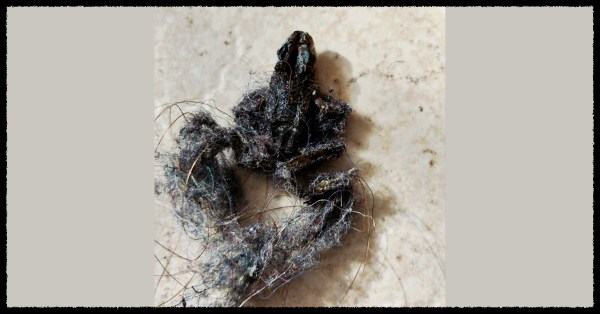
Look at this frog in the photo. The poor sod invaded my home and, with no way out once the window was closed, was robbed of his life under a cardboard box stuffed under a bed in a room bereft of magic happenings. His near-fossilised corpse was not uncovered until a plague of bird lice (or similar, one assumes, as one is no entomologist) descended upon said bedroom (finally, some magick, albeit rather black). Did the frog really deserve being sentenced to such a bleak and merciless death, merely because he didn’t know any better than to jump through a cellar window in his desperate search for shelter from a storm? Or maybe he was hiding from his wife, I don’t know. Husbands seem to think that my house is particularly good for that. Was. I have since escaped my Fritzl-esque abode.

Apologies, yet another bee seems to have gotten itself trapped under my bonnet today. Where was I? Oh, denigrating the lives of strangers.

As I mentioned in last week’s post, World Mental Health Day is coming up and I haven’t really gotten my frustrations out of my system yet. (As if that’s ever going to happen – let’s be honest). Or, rather, I didn’t feel as if I got my point across as clearly as I’d envisioned. Now, I am not dismissing the importance of these events – without them I’m sure some people would be utterly oblivious to how much our mental health impacts our daily lives. What’s missing, though, is that it’s an aspect of our overall health, because some people seem to think that matters of the mind have been assigned its very own little branch.

Perhaps due to the minute state of their own mind, they haven’t the cognitive ability to comprehend such afflictions.

Either way, I’m not saying we should introduce World Meniscal Tear Day or International Sciatica Month (although, it would be nice if someone donated a few fistfuls of dollars to whomever is in charge of the research on how to fix those), but mental health issues really needn’t stigmatised further.

Let’s keep in mind that our health fluctuates. Some aliments are chronic, others acute, most are temporary. In most cases, life goes on. It’s not all suicides, extreme paranoia and drowning in an abyss you can’t seem to peel yourself away from. Sometimes you can remove a bit of the patella, rather than chopping the leg off altogether. There are good days as well as bad ones.

What’s more, there’s no such thing as perpetual happiness. Does that mean the opposite is true, that there’s no such thing as perpetual despair? Personally, I don’t think you could have one without the other. Of course, it’s not ideal when you only experience the extremes of either, but I think there’s something to be said for embracing all colours of the spectrum. Sort of an emotional barometer, if you will.

I’m getting away from myself again, but you get it. Let’s say someone you care about is in hospice. You wouldn’t expect them to sit there and wallow in their oftentimes excruciating pain – you’d allow them to have a laugh or crack a smile when something funny happened, wouldn’t you? You wouldn’t take that as a sign that they’ve miraculously recovered, all of a sudden. Yet, if you saw someone you know with chronic depression doing the very same thing – daring to take pleasure in something so banal as a quote from, say, their favourite Leslie Nielsen movie, society/popular culture/random fantasists has taught you to suspect they’ve been faking it all along. Therein lies the stigma.

Bit of a rant today, I must admit. So, to wrap things up a bit (and maybe trying to find our way back to what drew you in in the first place), let’s get back to that price tag. What determines the value of an individual? Surely it’s their inherent qualities and not external factors beyond their control? Or, indeed, the internal factors over which they hold no power? Why do we seem to think that we are right to make any sort of assumption about a stranger’s value at all when we know nothing about them? If we’re all going to walk around pointing fingers, then what’s the point of the judicial system?

I know, a bit far-fetched towards the end there. I’m not trying to teach anyone a lesson here, I’m just airing my frustrations over our collective existence’s great injustices. I bet the wrong person reads this and ends up using it as an example of why we need to shut people like her up. Och, well. As you can clearly see, I, too, am guilty of passing judgement left and right, using other people’s past and future judgement of myself as an excuse. I reckon we can all do better.

A Roman Emperor once said that you should first turn your gaze inwards before passing judgement on another. Carl Jung famously said: “Thinking is a difficult art, therefore most people prefer to pass judgements.” John Fogerty said it better; “Before you accuse me, take a look at yourself“.

See you next Tuesday. Until then, why don’t you check out this brand spanking new EP linked below? You might know the singer.

Would it kill you to educate yourself?

… instead of telling others what to do or think, that is? The content of this post might seem upsetting to certain readers. If you or someone you know struggle with suicidal ideation, or if you’ve lost someone to suicide, reader discretion is advised. If you’re in the UK, you can find one or more of the following links useful: Suicide Prevention UK, Men’s Minds Matter or Find a Helpline (this last one lists most, if not all, of the helplines in the UK).

If you’re in Norway, however, they’ve still got their heads buried so deep in the sand trying to pretend that everything’s fine, that there’s no helpline with competent professionals handling the phones. No one to reach out to, who won’t first inform you that they will have to let the authorities know if they suspect you’re at risk of endangering yourself or those around you. No one who will just sit and listen while you empty your head of those toxic thoughts that never seem to stop, without telling you how sad your pain is making them feel. Thus, no links, as I don’t think they’d be helpful.

If you’re lucky, though, there are some beyond decent GPs in this country, who can and will help if prompted. So, if you feel as if you’re not being taken seriously – and can handle the required research to find the right GP – it might be worth looking into a swap.

This past Thursday, the 10th, marked yet another World Suicide Prevention Day. You can read more about it on the International Association for Suicide Prevention (IASP)’s website by clicking on that link, but if you don’t know why there’s a whole day dedicated to prevent people from diving head-first into the abyss – this advocacy and communication event was established in 2003, in conjunction with WHO, to make the world understand that suicide can be prevented. Here’s a thought; why don’t you use that day to educate yourselves on mental health matters, rather than telling everyone else to “check on their mentally challenged friend and/or relative” on the one day of the year they might actually want to be left the fuck alone?

I’ve written about this topic on numerous occasions – hell, you can even read about it in my book – but, unfortunately, it seems to stay relevant. Thus, here we are again. I am writing about it today for two reasons:

1: What I saw on social media on the day made me want to vomit. Moreover, it made me feel sick to my stomach with shame and even more alienated than I normally do.

2: World Mental Health Day is coming up in less than a month, so I’ll do my part to impart some of my wisdom (take that with a pinch of turmeric and maybe demote it to life experience) and see if it helps.

Let’s get to it, shall we?

First and foremost, telling people to check on their friend on the one day of the year when the company you follow on social media tells you to does not make you a good person. Nor does it help raise awareness, because you haven’t educated yourself enough to know what you’re talking about. Had you had the decency (or, rather, awareness and empathy) to look up from your smartphone screen for even a second, you would have realised you could do more by just acknowledging those around you. I’m not saying you should smile at any random feck that falls into your path, but at least take your bag off of the seat next to you so that someone else can rest their weary bones or, indeed, choose whether they’d like to sit or not.

The above is applicable to every day of the year – not just the one. Just like with our physical health, our mental health is also perpetually there, in whatever state it may be. What’s more, the general public’s failure to acknowledge each other in the everyday can actually be the one think that breaks the camel’s will to go on, so to speak. But a nod, a ‘me before you’, a smile or a wave at a neighbour could also be an actual lifesaver for someone whose only thought is that they’re so worthless they might as well do the world one last favour and shuffle aff it.

I must admit, though, this post isn’t fuelled purely by John Lydon’s favourite form of energy, nor by my appallment of how some people use their Instagram account. No, I’ve been inspired by how a recently bereaved friend of mine has been able to truly live in the spirit of ‘what they would have wanted’ in reaction to their loss. Instead of withdrawing and wallowing in their grief, whilst taking their time to properly grieve, they are out there raising money for research and awareness for the cause by continuing their pal’s legacy – ultimately showing the rest of us how we can help prevent more loss and that there is still a life to be lived after death.

If you are able to help, please head over to this JustGiving page where they are raising funds for FACE (Fighting Against Cancer in Edinburgh).

That’s all for today. I shall see you next Tuesday. Until then, do something nice for yourself. Maybe that’ll give you enough energy so that you’ll do something that makes someone else choose to go on, without it feeling like you actually had to make an effort.

Also, here’s a tune that’ll pull at your heartstrings and make you think – whether you know the whole story or not. Then again, who really ever does? The truth is subjective.

Pearls and swine

“…bereft of me, long and weary my road has been”, sings Chris Cornell in the 2003 Audioslave tune I am the Highway. Now, before you start thinking I’ve sunk low enough to steal someone else’s words because I’ve been suitably bereft of the ability to think of any of my own… this is just where I’m at today. Left to my own devices, my thoughts have gathered at these words forever tattooed onto the walls of my inner workings, as they so often do when I refuse to acknowledge it’s time do admit defeat.

Why do we let ourselves entertain the hopeful thoughts so far-fetched even the most oblivious can spot it a mile away? Well, it’s better than never daring to hope for anything at all, I guess. And, as we all know, hope becomes the motivation we need to get closer to our goals. Although, I’m beginning to think that it’s time I started to figure out what my goals really are. Daydreaming doesn’t really cut it when you have to deal with the outside world.

Alas, I am not about to start moaning about my hopes and dreams. And, for those of you hoping that I’d become much wiser just because the number of days I’ve spent on this earth has increased by all of seven since last time you were on this site, I’m afraid you’re in for some disappointing news – the person writing this is no sage just yet.

BUT. There’s a lot to be said for having experienced the least disappointing birthday in all my days. If you were a part of it, whether physically or in spirit, know that there’s not enough gold stars in the world to decorate your page in my book.

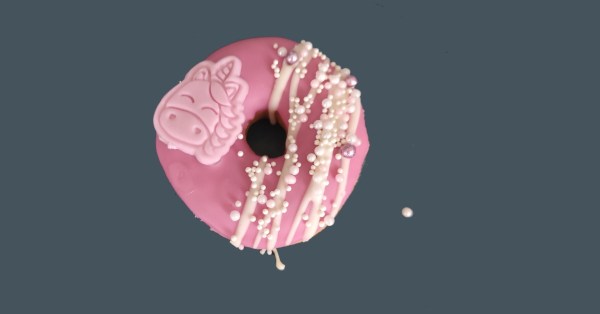
There’s some sort of storm brewing, I can feel it. But I will leave any deeper reflections on that for another day and instead bring your attention back to the unicorn on the donut in the blog photo. Someone made sure I got a donut with Scotland’s national animal on it on my birthday and it was excellent. Even brought a smile to my face. And it got me thinking that this outside world might be ready for my return. Although, I can already promise you, that the previous week can attest to the fact that I’m nowhere near finished making ‘mistakes’. But, hey, I hear experience can make you wise… as long as you’re willing to learn from it and/or own up to the fact that the only person you need to honour and look in the eye (in my case, at least) is yourself.

See y’all next Tuesday. Until then, have a listen or two to the song mentioned earlier:

Irreverent reveals

Someone commented on the not entirely spectacular fact that I haven’t posted anything on a social media account in over a year. Well, that’s due to a number of factors, but two of them are a) whenever I am out doing something with people whose company I enjoy, I tend to keep my phone tucked away and/or I’ve not got the Mark II on me, or b) what I consider a typical Kodak moment these days is something akin to the header photo. Now you know.

The above has very little to do with what I am about to write, though, other than that I found something that is revealed in the carving of the statue of which we can see the backside as particularly post-worthy. Why on earth would you spend time on including the cloaca of an inanimate object? It’s not like it’s going to need it? See, its mere existence beckons an array or questions.

On another note, you can do a deep-dive into cloacae (tee-hee) and/or other “digestive tract talk” by checking out the Three Bean Salad podcast. Perhaps start with the Adverts episode. Right, that’s enough of the anus for one day.

My recent posts may or may not have revealed that I’ve been on my second book, but somehow let procrastination get the better of me. So, in an attempt to force myself into holding myself accountable, I’ve decided to unveil the title, as well as the prologue to see what you guys think about it. Feel free to weigh in however you like, either by clicking on the icon you prefer below

or, you can comment on this post or use the contact form. If you’ve yet to read my book, the Kindle version is cheap as chips.

Next week’s post will also be a reveal of sorts, but we’ll cross that bridge when we get to it.

Right… are you ready? Am I ready? Here goes:

Life in Reverse – Killing Myself to Live

Prologue / Suicide Note, Pt. 1

A year has gone by since we left Hannah on that bus, finally strong enough to take a step in the right direction and standing up for herself to a person that had caused her nothing but harm over her formative years. You would think she’d be thriving right about now, right? That she’s finally all settled in her lovely new flat, aching to get back to work with the support of her therapist, a healthy romantic relationship brewing somewhere on the horizon. It turns out, though, just because you’ve decided to start making things work for yourself, doesn’t mean the universe is going to get on board. Funny, isn’t it? We’ve all heard the words; It’s going to get worse before it gets better.

The problem is, we can tackle ‘worse’ just fine. It’s what we do! It’s the ‘better’ that might just be the end of us.

And, yes, all of the chapters are related to relevant pieces of music. Also, if that tickles you, you should read Trackman; a spectacular piece of writing by Catriona Child.

So, I shall see you next Tuesday, for my second unveiling. Until then, here’s the song mentioned in the excerpt:

Squirrels and the magic of behavioural economics

You might wonder how I let my personal life fall into a state of such disrepair. Well, without going into too much detail, my theory is this:

From a very young age, it was instilled into me by my caregivers that fear was the best – if not only – motivator. Meaning, of course, that any flaws or failures were to be subject to castigation of the utmost severity (i.e., you’d be terminated from the household and stripped of your privilege of any further ‘caregiving’). Success equalled strengthening the brand of the commissioner(s) – previously known as the caregivers – whereas failure to comply would lead to the ruin of the same.

The positive outcome of this for me, personally, was that I learned how to make myself do things that didn’t come naturally to me (like, say, fucking maths, meticulously budgeting and sticking to it, always paying a higher than required tax percentage and calculating the energy prices in case of inflation – all things any child should know how to do, right?) by always expecting the worst. This makes me the perfect employee, as I will always strive for perfection out of the sheer fear of being furloughed, or worse.

Alas, for someone letting fear define what’s important, the balance between work and life would be more or less non-existent. Furthermore, striving to do anything that might spark any kind of joy outside of the workplace would be deemed unworthy of the same focus, as they don’t have that same fear attached to it. Or any. So, if fear is motivation and there’s no aspect of fear in what you are doing, you’ve no real way to convince yourself that it is valuable enough for you to work towards. This should be regarded as one of the negative outcomes, of which there are plenty. For instance, you can read a little something I wrote about “love” and emotional wounds by clicking on this sentence.

Conclusion: With this fear-based approach to success, one would fail to prioritise self-care when needed – or at all. Ultimately, this could lead to forgoing any social interaction, personal hygiene efforts or indeed after-work activities that only benefits the self, meaning you’d only really feel like a ‘real’ person when called upon by the commissioner. Which, in turn, would lead to a sense of increasing worthlessness that might lead to prioritising self-harm over selfcare.

So, how does one go about changing the script, so to speak? Do you really have to go reinventing the wheel, or un-learning everything with years and years of cognitive behavioural therapy? How do you know how to spot the bullshit – or, more importantly, the bullshitters?

Well, I may not have the answers you seek, but my money’s on this: It depends on the fucking person. The one guarantee is that there’s no cure-all. But, if there’s one thing you need, I’d say it’s accountability to yourself and to your goals. And your motivation cannot be founded in fear or regulated by negative self-talk. This includes the fear of not reaching your goals!

Perhaps the key to motivation lies in letting go of a fear-based driving force. Or, maybe it’s about learning how to accept and embrace that good things are in fact real and good, and not just some mirage or dirty trick. It could be physical too, of course. Maybe you just need to allow yourself to breath in order to let your shoulders down. Whatever it might be, I think it requires the self to let go of the assumption that society expects certain things or collectively looks down their nose at you for not being good enough. In reality, it is the self that has adopted this view and made it its mantra. And that just might be the key to change.

After all, if the person holding the whip that caused those scars across your back no longer bothers to crack it; why should you?

See you next Tuesday. Until then, enjoy the fine tune below:

Swan Songs

Recently, a dear friend and I were talking about how autumn had suddenly descended upon us, and she mentioned how her partner had referred to the transition as not the end of summer, but “the beginning of their year”. I really liked that. So, as a few chapters in my life are closing, I aim to view the coming time as a new beginning – rather than grieve what could have been.

According to Wikipedia (and almost every dictionary), the phrase swan song “refers to a final gesture, effort or performance given just before death or retirement“. Not only does it sound better than saying something along the lines of ‘going out with a bang’ or similar, but I find it helps highlight the gravity of purposely exiting whilst leaving behind something of value to commemorate your efforts. In other words, you’re not just burning the bridge, you’re blowing it up in ways Guy Fawkes could only dream about.

Incidentally, the above phrase is also the title of one of my favourite Down songs (YouTube vid embedded at the end of this post).

As I mentioned, there are a few things coming to an end this summer. Some have plagued my mind for what seems like an eternity, while others simply seized to make sense over the past wee while. The cost had started to exceed the benefits to such an extent that it started eating away at my sanity and everything I’d worked so hard for started to come tumbling down. Only this time, I was able to see that I was going to have to make a choice if I wanted to get my head back over the water’s edge again. I might still be treading water, but at least I’m breathing.

If you missed my last post, about the detrimental effects of avoiding making choices I should have made, you can read it by clicking anywhere on this sentence.

Some endings are inevitable, other ventures meet their demise by design. Then, there are those that come to an end due to sheer self-sabotage. Here’s hoping that sort of thing has run its course forever this time.

Short and bittersweet, like most things one may be feverishly indifferent to, this post, too, has entered its final paragraph. I’ll see you next Tuesday. Until then, make sure your new beginnings fit in with your main goal, go read this post about hope – or, better yet (for me), buy my book – or just do something that makes you happy.

“Send me love and I may let you see me. Send me hope that can spin in my head”

FTS.

Catch-’26

This week, I’ve been thinking a lot about choices. Or rather, the fact that the choices I dared not make are the ones I’ve come to regret the most. To quote my dear friend Bob (misquoting Wayne Gretzky):

“You miss all the shots you don’t take”.

You could say our lives are shaped by the choices we make. Sometimes, the choices we don’t make shape them in ways we cannot control. In fact, refusing to make a choice is a choice in and of itself – it’s choosing to avoid taking responsibility for your own life and/or actions.

Right, a bit bombastic, perhaps. But you catch my drift.

The most annoying thing, though, about the choices I didn’t make, is that I went against my instincts by not making them. Every time, without fail. More often than not, I refrained from making a choice simply because I was waiting for someone else to do so – as if I was unable to make the right choice for myself when I knew very well that their choice would be detrimental to myself, if not the both of us (or worse).

Now, I’m not the type of person who wallows in bitterness. I’ve no time for that. What’s in the past is in the past and I don’t like wasting my time on making myself feel terrible because I’ve acted out of bitterness or resentment. Alas, when one is seemingly unable to learn from one’s mistakes – i.e. the pattern seems to re-emerge over and over again – one simply has to stop and try to shake some sense into oneself. Wouldn’t you agree?

Please excuse my self-indulgent ranting, but I’ve had 8 hours of sleep two nights in a row for the first time since I was a teenager and don’t know what to do with myself. We’re going full gonzo today. If you’d prefer something more nuanced, let me direct you to a page containing links to outlets from which you can purchase my book, or this post about some nonsense that other readers seemed to enjoy.

Another thing that worries me is this; what signals am I sending my subconscious by ignoring my gut feeling?

I found several pieces of writing on exactly this, but only one of them seemed to be rooted in scientific research and based on The Arbinger Institute’s Leadership and Self Deception: Getting Out of the Box (2000) and was posted on Psych Central seven years ago. You can read the article by clicking on this link. The conclusion mirrors my beliefs/fears; self-deprecation.

So, how do we change this? I once read somewhere that it takes approximately 14 days to change a habit and I’ve regarded it as truth ever since. You cannot change my mind. But, that means actively doing something to implement the desired change over those 14 days. Surely that’s a lot of work just for the sake of some unconscious self-respect? Or is it in fact a very small price to pay for something tremendously valuable?

I think I’ll put what I learned from last week’s post about hope theory to good use and set a goal for myself for the next fortnight and find out, as an experiment. Perhaps I’ll even give you an update on my findings.

I’ll see you next Tuesday. Until then, stay true to yourself and listen to Lowrider:

Don’t fault a girl for dreaming

Growing up, my dreams kept me going. The dream of finally one day escaping that horrible shit town, the gossip, the not fitting in, the shame, the lack safe places – you bet. But also the dream of a future filled with a few possibilities and a couple of pretty mad things I just knew were going to happen, however ridiculously far-fetched and logic-defying they may have been.

Interestingly enough, it was the particularly mad ones that took up most of my time – I suppose because they were so far from my own reality that they didn’t feel tainted, somehow – and they’ve been the ones to actually come true once I did get out of that place.

Don’t worry, today’s post will be short and sweet (?), because I’ve realised I’m meant to be on holiday this week – might as well give you lot a little time off from the usual doom spirals as well.

Regardless. I think it’s time I put the same amount of passion, overthinking and incessant manifestation I leant to those “impossible” scenarios to some hopes and dreams that would vastly improve my existence if they came to be. Not unlike last week’s post, this is a bit of a mindset change situation. But the 6am sunset I witnessed this morning lit a spark. Perhaps I’m ready now, to let the good things in.

If we’re to say that, in general and within reason, hopes and dreams (the daydreaming kind) are good for us, not many research articles will disprove that claim. I didn’t find many anyway, but I didn’t dig very deep. Click here if you want to read about how hope “kills your chance of happiness”.

What I did find to support my own theory, though, were a few interesting pieces on the matter. This editorial on the psychology of hope is one of them. This is a quote from said article: “[sic] hope seems to act as a catalyst in transforming negative experiences into growth opportunities“.

Forbes published some findings about the psychological basis of hope in this 2021 article, where you can learn more about hope theory and positive psychology (essentially, hope=motivation), as well as the detrimental effects of hopelessness.

What I gather from what I’ve found, it’s safe to say that hope can get us through the bad stuff in life. However, you’ll need to use your hope to map out a route towards your goal(s), starting with a clear indication of what it is you’d like to achieve. Otherwise, it’d be a bit like hoping to win the lottery and not buying a ticket.

Yes, I saw that episode of My Lottery Dream Home as well, where somebody won because they found a ticket and/or a scratcher, but I don’t want to go into fate/luck/karma blah, blah, blah. Love the show, though!

I feel as if there’s some stigma attached to both hopes and dreams, but I’d like to change that for myself. The shame attached to my daydreaming is someone else’s and not my own. Like in Field of Dreams, or better yet, Wayne’s World II, or the first one (at 9:17 ish);

if I build it, it (or, I, hah) will come. Hope will be my tool.

I hope to see you next Tuesday. Until then, here’s a lyric from a song by a band of my favourite dreamers (link to full song in the YouTube video below):

“When sadness fills my days,

It’s time to turn away

And let tomorrow’s dreams

Become reality to me”

B. Ward, G. Butler, T. Iommi, O. Osbourne, 1972

Grave expectations

“So, how’s the writing going?” he says. And I had to admit that it’s not. At all. “I’ve not done anything productive since [sic]” and instantly I could hear all the excuses I’d been giving myself for the past 6 months, for how I’ve failed to do the one thing I know will give me purpose, accountability, even joy in some weird sense.

Self-sabotage, pt. 2, eh…

You see, when something good happens, hope starts to build. Not even that, maybe just a glimmer of hope triggers something so alien and futile as a new neural path struck in the opposite direction of all the others. So, we choose not to do the things that’ll enable such hapless and fruitless endeavours. Until the next time, of course, something unexpectedly positive in nature comes around and we’re forced to look lady luck in the eye.

After all, what’s more terrifying than going after the holy grail knowing you’ve got an actual winning chance?

Welcome to Desolation Highway.

If you’re taught, early on, that disappointment is inevitable due to your existence alone, you’re no doubt better off trying to shield yourself from the things that seem unequivocally and genuinely good. And your scepticism would be coming from a place of experience, that good things only happen to other people and not to you. We’re meant to contribute to the greater good by making sure others will both have and eat all of the bukkake. Or, was it cake? Who knows – not a fan of either. But the one certainty is that self-indulgence of any kind is not only wrong, but so wrong that it takes away from the so-called greater good. Which is why completing the one thing that would show others that you’re motivated by the one good thing that actually did happen, despite your lack of trying and incessant efforts to burn all bridges, becomes a reminder of how guilty you should feel for recognising even the slightest flicker of self-worth.

Why is hope such a dangerous thing, when hurt is the feeling you know best? Perhaps it’s because you already know that, when you allow yourself to feel hopeful, you set yourself up for even more chances of finding those small pockets of happiness. But not only by chance, but with actual effort. And, if that were to go away after having had the chance to get used to it, the inevitable hurt at the end of it would be such that we could not even stand to bare it. So we do our best to stop the good things from happening, just to avoid the extreme pain of potentially becoming rejected by something we actually wanted for once.

Hope and epistemology are, to me, interlinked by the fact that they both relate to expectation. The latter may be more science-based than the former, but it’s all about being able to envision realistic outcomes based on your experience. I may not be the biggest fan of Socrates’ biggest fluffer, but I do think he ‘d know exactly what I’m getting at here. Arguably, without Plato we wouldn’t even know about Socrates. Famously, Plato never spoke in his own voice in his dialogues, yet he seemed to understand the importance of his own role in bringing forth the messages of them. Double-edged swords and all that.

I’m not sure what’s brought this philosophical babble on, it might have been a discussion I had earlier today about the theory of the Id and the Ego being excuses for horrible personality traits that you don’t want to acknowledge, and I may or may not write a word or two on that soon. But not tonight. It is far too late and I seem to have decided that I’m going to try to not sabotage tomorrow for myself just yet.

I’ll see you next Tuesday. Until then, let’s all just remind ourselves that good things can happen and that it’s okay to hope – maybe not fully expect, but certainly dare to hope – for some things to work out in our favour too. And not only despite our best efforts to stop them from doing just that.

Blog at WordPress.com.

Up ↑