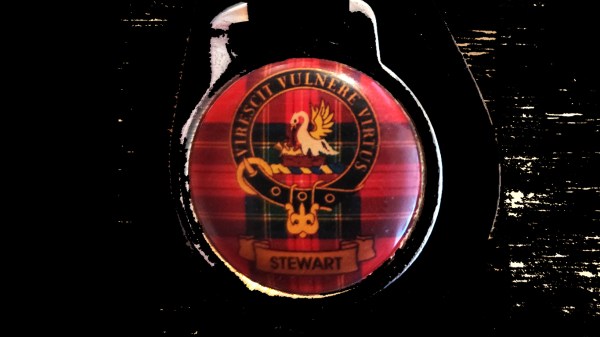
Or does it? Sources1 say, it depends on the context. It, of course referring to the term courage, the ability to grow strong, the wound (and the nature of the wound), and/or all of the above.
Confused? Well, prepare to have your confusion intensified.
Somewhat loosely (or not so loosely, depending on the translator’s localisation abilities) translated from the Latin virescit, vulnere, virtus, this served as a clan’s motto back in [insert googleable factual numerical here]th century Scotland. Since then, it’s become a well-known phrase among non-native, occasional British Isles-dwelling, Anglophiles.
One would assume. I’m no historian.
The phrase, however interpreted, and its ambiguous meaning has always been rather intriguing to me. What I’m about to delve into, my dear reader, is the phrase’s meaning in relation to a couple of different types of wounds. Let’s get on with it, shall we?
Let’s get physical
Likely the most common type of wound; the flesh wound. The kind that more often than not leaves you with a gnarly scar, and in some cases with sepsis and death. Commonly found on miniature humanoids, clumsy fully grown humanoids and shark attack survivors, physical wounds are as common a sight to us as a depiction of the baby Jaysus.
Assuming the origin of the phrase had anything to do with the interpretation, you might be right in thinking that this is where the ‘courage’ bit came from. But surely, being stabbed doesn’t make you courageous? Unless a sword to one of the major arteries leaves you completely bereft of life, it makes you lucky to have survived – not courageous. Although, once you’ve survived such a thing, you’re left with the knowledge that it is possible to escape death in such a scenario, so you might venture into the same situation again, if prompted. Does it make you courageous, though? Or just reckless?
A rose by any other name would smell as sweet, lest it smelled of almonds, as famously unspoken by a young Capulet in a Shakespeare play.
Physical wounds, whether character building or not, are often inflicted upon the wounded by another physical entity, or oneself. Although the latter might take us directly into the next category.
This one was getting out of hand anyway.
Scarred for life
Figuratively speaking, of course, we’re talking about emotional wounds. The ones you can blame your parents for.
Do they make you courageous, though? Defiant? Bitter? Or just useless? Well, unless you’re planning on looking into how your emotional trauma scarred you in order to better understand how and why you self-sabotage your interpersonal relationships and/or life as a whole and indulge in some habit reversal training, holding onto those scars won’t do much in the way of getting the abusive monkey off your back. And, if you don’t mind me saying; tackling your inner demons takes courage.
So, what’s the conclusion here? Can courage grow strong at a wound? If anything, I reckon any trauma, corporeal or psychological, plants a seed. Whether or not that seed grows into something useful depends on the way you cultivate its growth. I also believe that courage is impulsive. It cannot be taught. It comes to you in your time of need, when there’s no time to mull things over. Your ability to analyse posttraumatic events for healing purposes will leave your subconscious better equipped to handle future traumatic events. These are my beliefs, not facts. My take on it. It’s only words, and words are all I have, to take your heart … hang on, not heart… Nevertheless, listen to the Bee Gees tune embedded below if you want to hear what comes next in the lyrics. I do not plan on shouting Kali Ma from the rooftops any time soon.
Don’t let anyone stab you, physically or mentally. Or, if you do, remember this quote from the Stewarts – the origins of the Clan Stewart and their place in Scotland’s history (LangSyne publishing, 2005):
‘To the dungeons strong
Haul the wretches along,
As in Christ’s my hope,
They deserve the rope.’
Enjoy the music, and I shall see you next Tuesday.
- It’s me. I’m the source ↩︎

