Hume-our me or go Home: a minute of your time for some chat about passionate reasoning

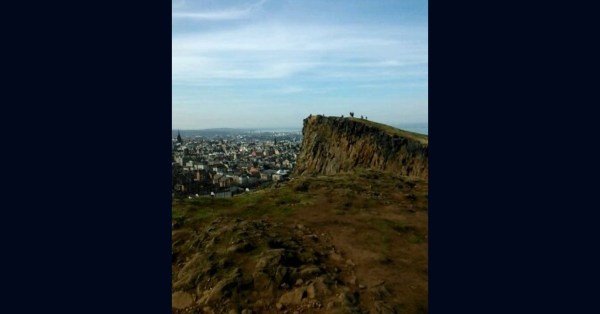
Now, as a young first-year Philosophy student, I must admit I was never partial to David Hume’s school of thought (although I did find it funny that he supposedly changed his name from Home to Hume, because “no-one in England went by Home”. Pretty far-out behaviour, for someone from Lawnmarket, Edinburgh.

Looks like the drugs are finally out of the system – let’s celebrate the return of my ever-charming personality!

So, why the hell would someone in their right mind all of a sudden start reading Hume, when they already know they won’t like it? Next-level asceticism? The short answer is no, this was not an act of self-harm. In fact, I’ve not been reading at all – he was quoted (if only very briefly) in a podcast episode. I cannot for the life of me recall what podcast this was, and I refuse to go through the log on my streaming app, seeing as I’ve listened to hours and hours of music since. But I know it had something to do with reasoning and causation.

The original (and full) quote is from section 3 of the third part of the second book in Hume’s A Treatise of Human Nature. It is grossly taken out of context – much akin to a headline from The Sun – and reads as follows:

Reason is, and ought only to be the slave of the passions, and can never pretend to any other office than to serve and obey them.” (1739-40)

The quote is often seen in combination with another part of the text so far down on the same page that you have to assume the latter works as a sort of book-end to the former, after a series of examples of how the ‘self’ defines reasoning driven by passion. The latter does not follow the former without some degree of detailed explanation. You can read the entire thing by clicking anywhere on this sentence.

Now, feel free to call me on my jumping onto the express train to judgement city, but I’ve spent enough time behind semi-dodgy boozer bars to recognise the drunken ramblings of a grown man with certain, shall we say, repressed urges.

Nevertheless, it turns out the 2026 version of me actually quite likes these musings of Hume. And, what resonated was the part about our passions bleeding into our reasoning – and not only in matters of the heart. What are we, without passion? To me, life would have very little meaning without it. The joy you feel when a risky venture pays off. The slack you might cut yourself if it doesn’t, because the passion drove you to act carelessly.

I believe that any human creature capable of emotion can be passionate about a multitude of things. I mean, need I bring up the bog roll conflict?

When shit gets, well, real shitty, my passion-fuelled reasoning is the only thing that can shift my focus. Albeit not always in a good way, but still. Just like a limp handshake, a passion-less existence is not for me. Which might be why antidepressants only make me unwell – I need the passion to feel alive. I thrive on the chaos I’ve created, because I lets me access this superhuman stress-tolerance in the event that real chaos erupts. When you flip the switch, however, just crossing the street might feel overwhelming.

If you ever feel overwhelmed, dear reader – or if you’ve had enough of these seemingly unstructured ramblings – I’d like for you to drop me a message via the contact form. I’ve got loads of ideas, but I’m up for a challenge. Finally! 10 points goes to the first person that manages to stump me.

I am going to love you and leave you for now. I shall see you again next Tuesday!
Until then, this video had me mesmerised for so long I lost track of time the other day… Enjoy responsibly (by clicking on this paragraph, or get your ya-yas out to the embedded video below).

Efficiency suffers in wake of covid chaos

It’s finally happened. The movers and the shakers, the doers, of this world have all been diagnosed with an array of neurodevelopmental disorders, leading to unavoidable burnout due to the complete exhaustion that comes with being forced to do fuck all but contemplate your own navel, ultimately leaving the world unattended for just about long enough for the meek to think they’ve inherited the earth.

The result? Well, take a second to look around you. You’ll either see a sea of zombies with their heads bent at an awkward angle, trying to make sense of millions of pixels forming ridiculous – artificially generated and based on the cookies they’ve let crumble all over their digital existence – shapes on a magnetic screen lit by sickly blue to keep them from ever having a restful night’s sleep ever again… Or worse, you’ll accidentally subject yourself to the news.

Right, that’s enough of the doomsday pish. But, sadly, I don’t think I’m too far off. We’ve become oh so self-absorbed. People seem to think it’s morally acceptable to apply for a job whilst filled to the brim with a self-inflicted parasite, fully intending on going on maternity leave within three months of being offered the position – a position that ideally should have been awarded someone with a work ethic, had the recruiting party had even one iota of business acumen. They’re eliminating any chance of progress – it’s the opposite of a sustainable solution.

Once upon a time, human beings were capable of original thought and problem solution, enough to justify some degree of autonomy. Today, we’re on the precipice of social alienation due to an increasingly dangerous heteronomy. Go read some of what Science Direct wrote on the subject if you haven’t already.

Or you could study the collective works of philosophers Marx, Hegel and Kant. Or perhaps the works of this philosopher will be more to your liking?

I’d argue that the lack of empathy, the minimal importance your work has in your life and the general beigeness of society that the new omni-Deus/lord panic has invoked is alienating us further and further from anything other than apocalyptic apathy with every insincere ‘we’ uttered.

We, the people, are unequivocally fucked. Unless we wake the fuck up.

That’s it for today. Bleak, I know. If the world is still turning a week from now, I shall see you next Tuesday. Meanwhile, you should listen to this absolute gem from one of my favourite bands of all time; Flotsam and Jetsam.

Running in the void

Ever feel as if you’re going 200 miles per minute without moving an inch? Completely untethered, yet somehow confined by some invisible force that makes any type of forward movement impossible? You’re desperate to move, but void of course – any attempt at starting something new seems to fizzle out almost before you’ve even begun… Turns out there’s a word for that; Kenodromia1.

The Greek term [Kenodromia] is used in astrology, as a name for the period “when the moon is passing through a ‘void’ region in the zodiac” (as defined by Porphyry of Tyre in Introduction to the Apotelesmatika of Ptolemy), meaning, in a sense, that any activities, planning or manifestations executed within the specific time period that falls on this region will be futile. There’s more on the meaning of a ‘void of course moon’ on Jupiter’s Realm, if this is your cup of tea.

Now, regardless of your views on astrology, I think just about anybody would be able to relate to the feeling of utter hopelessness that labouring with futility beckons. And hopelessness is certainly something most of us would like to avoid feeling. Hope is what gets us through when everything has turned to shit and there’s no guarantee things will get better. What is the meaning of anything, if we don’t have hope for the future?

Last Friday saw the marking of World Mental Health Day, a day with an objective to raise awareness of mental health issues around the world. A tremendously important day for too many reasons to mention, made even more significant for me this year, as this was the day that Jess from The Next Chapter chose to share her review of my book. I love how The Next Chapter keep their content fresh and unique – they’re a go-to for anyone looking to find new authors, books with interesting hooks, or even the locations of the most magical little bookshops. You can check out what they had to say about my book on Instagram by clicking anywhere on this sentence.

For those of you who have read Journey to the Centre of the Mind…, you will know that the the story’s protagonist is faced with the choice between giving up completely or accepting and dealing with the detrimental effects of untreated mental illness. Needless to say, I am all about raising awareness and spreading the word. I am truly honoured that they posted about my book on such a special day. What’s more, it gave me hope. Hope that the story can keep finding readers who need it. The hope that others will find hope for themselves or their loved ones by reading the story. The hope that we will one day be able to remove any stigma or misconceptions. The hope that governments will start allocating the funding required for the medical treatment and ongoing research of mental health issues and illnesses. And that’s why I thought I’d look at the significance of hope today. After all, hope is the reason we’re all here.

The meaning of hope, according to Merriam-Webster’s online dictionary, is “to cherish a desire with anticipation”. Many renowned philosophers, such as Descartes, Hobbes, Leibniz and Spinoza, distinguish hope from wishful thinking in that hope can be likened to confidence – something that can function as a catalyst once you realise that something is you desire is attainable. The theoretical likelihood of failure can be equal to that of success, but being able to see what needs to be put in place gives you motivation enough to convince yourself that the positive outcome is achievable. Hope’s opposite is fear, which we all know can function as a sort of assurance of negativity. One breeds optimism while the latter breeds negativity (guess which one is easier to succumb to).

Brian Lawlor, Founding Director at GBHI at Trinity College Dublin, wrote in the post pandemic article What is Hope and Why Do We Need it? that hope is “a feeling and a mindset that you have to work at in order to achieve your goals, despite trying and extenuating circumstances”. It seems to me that hope is indeed something that we need, for both sustenance and growth – collectively and individually.

Unsurprisingly, it seems as if hope can beneficial to healing as well. In a 2019 article on Psychology Today, Polly Campbell writes that “research indicates that hope can help us manage stress and anxiety and cope with adversity”.

Hope isn’t just a feeling or ‘wishful thinking’. Rather, it is the ability to see beyond the horizon. It’s not about trying to be optimistic where we should be realistic, it is about knowing success is possible and taking an active role in achieving it by figuring out the steps. It is about keeping your calm and trusting the process, even on those days where it feels as if we’re completely stuck and nothing works the way that it should. It’s like realising you will have to abandon pole position in a race to refuel when your car is running on fumes if you want any real chance at making it through the last few laps at all – when there’s gas in the tank, there’s still hope.

Maybe this feeling of running in the void is the universe telling us we need to take a break. Who knows? All I know is that hope is powerful.

See you next Tuesday, no doubt for some more blatant self-promotion.

  1. Kenodromia is also the name of a band. You’ll find out what they sound like when you click on this sentence. ↩︎

Blog at WordPress.com.

Up ↑